
Sim racing steering wheels: round, GT, and formula rims
A steering wheel is the part you touch every lap, so it is worth matching to the car you drive rather than the brand on your base. Rims come in three shapes, round, GT, and formula, plus the hubs that turn a plain rim into a smart one. The shape decides how you hold it; the buttons, paddles, and display decide what you can change without lifting a hand.
The rim shapes at a glance
Section titled “The rim shapes at a glance”| Rim shape | Size and form | Hands | Best for | Examples |
|---|---|---|---|---|
| Round | 280-330mm, closed circle | Cross hands | Rally, drift, road | Logitech RS Round, Moza ESX |
| GT | 298-330mm, a closed circle on most | Move hands | GT3/GT4, touring, prototypes | Simagic GT Neo, Fanatec ClubSport GT V2 |
| Formula | 270-290mm, open at the top or the bottom | Fixed at 9-and-3 | Open-wheel (F4, F3, F1-style) | Fanatec Formula V2.5 X, Moza FSR2 |
| Hub, no rim | The rim you bolt on, typically 300-330mm | Set by the rim | Adding controls to a rim you pick | Fanatec ClubSport Universal Hub V2, Logitech RS Wheel Hub |
A formula rim is miserable for rally because the circle is broken, so hand-over-hand rotation runs your hands off the rim mid-corner. A round wheel gives up the fixed-hands precision a formula car rewards. Buy for the cars you actually drive most.
Round and GT overlap in that table. Three of the seven GT wheels reviewed here call themselves round rims too. The Moza KS is a butterfly with the top and bottom open, the Moza Porsche Mission R is open above and below two vertical grips, the Moza GS V2P states no outline either way, and Fanatec files the CSL GT3 under “Full-size GT3-style wheel (300 mm diameter)” without calling it round, so what separates the two rows is the hand movement and the cars rather than the shape of the circle. Size barely separates them at all: the GT band sits inside the round one apart from its bottom 18mm.
The seven spec lines: only diameter follows from the shape
Section titled “The seven spec lines: only diameter follows from the shape”A wheel listing prints seven things worth reading, and the shape settles one of them. The rest are set by the model you pick or by the base under it, so a shape row cannot tell you whether a given wheel has a screen, a clutch, or a way onto your base.
Diameter. A larger rim gives more leverage and asks for more hand travel at the same steering angle; a smaller one clears a desk and turns faster. This is the line the shape decides, on the wheels that publish it. The formula rims reviewed here run 270mm to 290mm and the seven GT wheels run 298mm to 330mm, so no formula rim here is as large as any GT wheel. One rim publishes no diameter at all: Logitech gives the RS Formula Wheel McLaren Racing Edition a 43mm height, a 188mm width, and a 286mm depth and never uses the word. Round covers both ends: 280mm on the Moza ESX and 330mm on the Asetek La Prima, where the 330mm is the figure Asetek gives for the button box measured with a rim on it rather than for any rim on its own. Asetek publishes no millimeter figure for six of its seven GT rims, giving them a box-contents line of “Rim 12.9 in” instead, which is 327.7mm; the seventh, the Dished Suede, is the exception at “Rim 340 mm”. A formula figure is a width or a grip-to-grip measurement rather than the diameter of a circle, which is why the Cube Controls CSX-3 spec reads “282 mm grip-to-grip”. The 298mm floor of the GT range is one trim: the Cube Controls GT Pro V2 is 320mm as standard and 298mm in its compact Zero variant.
Grip material. A napped wrap such as suede or microfiber grips through raised fiber against skin. A molded skin such as polyurethane or silicone is smooth, wipes clean, and gives less bite. Leather sits between them. Nothing about the shape predicts which one you get, and neither does the price. The round group holds both ends of the range, with molded ISF polyurethane on the $139 Moza ESX and a microfiber rated to 150,000 Martindale rubs on the $408.00 Asetek La Prima pair, whose $149.00 Round Comfort+ rim is the part carrying that rating. The formula group splits the same way. The ~$1,480 Cube Controls CSX-3 uses soft-touch rubberized grips and the ~$905 Ascher Racing F28-SC V2 uses motorsport rubber, while the $439.99 Fanatec ClubSport Formula V2.5 X uses “Genuine Alcantara® grips” in Fanatec’s own words. The perforated leather that used to sit in this sentence is a different Fanatec wheel, the non-X ClubSport Steering Wheel Formula V2.5, whose feature list reads “Grips made of genuine smooth leather, perforated for improved breathability” (read 2 August 2026). Suede needs maintenance. The ClubSport GT V2 review tells you to wear gloves on its 330mm suede rim, because skin oil mats the nap down where a sealed wrap wipes off.
Paddle count. A single paddle number adds the shifters, the clutches, and any programmable pair together, so read the split instead of the total. The Moza FSR2’s six magnetic Hall-effect paddles are dual shift, dual analog clutch, and dual programmable. The Simagic FX Pro’s six modules are two magnetic Hall-effect shift paddles, two custom paddles, and dual clutch. At the other end, the Logitech G RS Round Wheel and the RS Formula Wheel McLaren Racing Edition have none, because every input including the two shifters lives on whatever Logitech part they bolt to. The count splits inside a shape rather than across shapes, since the two-paddle Ascher Racing F28-SC V2 and a zero-paddle bare rim are both formula.
Screen. A screen puts fuel, lap delta, and tire temperatures on the rim, so you read them without a separate dash unit or a glance at the monitor. Six of the eight cards here sit under the formula heading: a 1-inch 128x64 OLED on the Fanatec ClubSport Formula V2.5 X, a 4.3-inch LCD on the Simagic FX Pro, a 4.3-inch 480p touchscreen on the Moza FSR2, a 4-inch 800x480 LCD touchscreen on the Cube Controls CSX-3, a 4.3-inch 800x480 60Hz LCD on the Asetek Forte Formula Pro, and a 4.3-inch 800x480 LCD touch panel on the Asetek Invicta Formula Button Box. The last two are button boxes that ship with no grip, so the screen arrives before anything you can hold does. Shape does not decide it either way. The Ascher Racing F28-SC V2 is a formula rim with no screen and no rev LEDs at all, while two GT cards have one: the Moza Porsche Mission R with the largest panel of the eight, a 5.4-inch flexible OLED behind tempered glass, and the Fanatec CSL GT3, which Fanatec writes as “1”, 128 x 64 resolution OLED display (white)”. That ties the ClubSport Formula V2.5 X for the smallest of the eight and is the cheapest screen on any card here, at $229.99. No round wheel with a card here has a screen. Two more GT wheels have one and no card: Moza’s KS Pro is a 300 mm butterfly GT rim with a “Display: 2.99-inch screen” and its CS Pro is a 325 mm round rim with the same row, both covered as rows on the Moza KS review rather than as cards of their own. A rev LED strip is not one, and neither is the 3-digit LED that reads gear, RPM, and the tuning menu on the Fanatec ClubSport GT V2 and the ClubSport Universal Hub V2.
Clutch paddles. An analog clutch paddle reads travel rather than on or off. You set a bite point in software, pull both paddles at the lights, release one to the bite, then feed the second in off the line, so the launch comes out the same every time. Shape does not predict which wheels have them. Among the GT wheels here only the Fanatec ClubSport GT V2 goes without, while among the formula rims the Simagic FX Pro, Moza FSR2, and Cube Controls CSX-3 have them and the Fanatec ClubSport Formula V2.5 X and Ascher Racing F28-SC V2 do not. Two wheels sell the clutch as a second purchase, and both are Fanatec’s: the ClubSport Formula V2.5 X and the ClubSport Universal Hub V2 each take the Podium Advanced Paddle Module, $229.99 on 2 August 2026. The hub’s $569.98 QR2 Pro listing is not a shortcut to one. Its contents list is the same 13 lines as the $369.99 listing’s, and the $199.99 between the two buys a billet-aluminum quick release.
Quick release. The quick release is both the joint the rim bolts to and the path the button data takes, and the brand sets it rather than the shape. Moza’s round ESX and formula FSR2 mount on the same Moza quick release. Moza publishes no generation number for it, and none for any of the other 11 wheels in its own catalog, where the release row names a material on eight of the 13 and gives only “MOZA Quick Release” or “Quick release” on the other five. Fanatec’s GT V2 and Formula V2.5 X both use QR2, which is the one fitting here that is versioned three ways: the Fanatec QR2 guide covers which of the Lite, standard, and Pro wheel-sides ships on which wheel and what swapping one costs. Thrustmaster is versioned two ways rather than three, and its own box lists name them the screw base and the latch base: the Thrustmaster quick release guide counts which of the 16 rims in its catalog that attach to a base ships which fitting and prices the parts that bridge them. (That figure read 15 here until this pass; the guide itself recounted to 19 rim and hub listings, 16 of them attaching to a base, when the Ferrari 499P Centenary Winner Edition was added on 3 August 2026, and this sentence had not been carried over.) The Thrustmaster EVO Racing Hub sidesteps the version question by shipping one holder of each, and the pitch circle it does publish, 58 mm, is for the rim side rather than the base side. Simagic versions its by size rather than by generation: the Simagic QR guide counts which of the 13 wheel and hub listings that attach to a base names a 50mm part, and what the 70mm one and the $89 QR-A adapter are for. Simucube versions two couplings and three connection routes across them, and the route is what decides whether the buttons work: the Simucube Link guide reproduces Simucube’s own five-column table of USB, wireless, and Link Quick Release wheels, prices the $159 hub and the $169 quick release, and sorts Simucube’s ten wheel listings by the route each one names. A generic formula 3-bolt pattern replaces the house fitting on the Cube Controls GT Pro V2 and CSX-3, both on a 70mm PCD, and on the Ascher Racing F28-SC V2, which uses the Simucube 2 quick release’s 6x70mm M5. The ClubSport Universal Hub V2 carries a pattern on each side, QR2 to the base and 6x70mm or 3x50mm to the rim you supply. The Logitech G RS Wheel Hub is two-sided the same way and publishes neither pattern: Logitech says only to “use the quick release to attach to any compatible Logitech G Direct Drive base”, and the rim goes on the front with the bolts and hex key in the hub’s own box. Rims and quick-releases covers cross-brand fitment in full.
USB and ecosystem connection. The buttons, paddles, and screen have to reach the PC, and three routes do it here. Most of these rims pass that data through the quick release with no port of their own, so the base is the only path, and the Moza ESX, Moza GS V2P, Moza FSR2, Moza Porsche Mission R, Asetek La Prima, Fanatec ClubSport GT V2, ClubSport Formula V2.5 X, and ClubSport Universal Hub V2 each state no standalone USB mode. The Moza KS is the one card here whose listing raises USB and leaves it open: Moza’s answer about non-Moza bases ends “You can connect it directly to a PC via USB for broader compatibility.” after a sentence about the separately bought Universal Hub Kit, and never says which of the two carries the port. The Logitech G RS Round Wheel and the RS Formula Wheel McLaren Racing Edition are both passive and carry no electronics at all, and the RS Wheel Hub their inputs live on goes further than any rim here: the word USB appears nowhere on that hub’s listing and Logitech names no port on it, so its buttons, shifters, and rev lights reach a PC through the base or not at all. Base independence is the rarer route. The Cube Controls CSX-3 runs its own USB on a magnetic Q-Conn cable, the Cube Controls GT Pro V2 runs Bluetooth or the same wired Q-CONN, and the Simagic GT Neo has a standalone USB option that drives its buttons with no Simagic base. The Ascher Racing F28-SC V2 crosses the gap wirelessly over Simucube Wireless Wheel, on one 14250 lithium cell rated for roughly two to three years. A USB cable is not the same thing as base independence: the Simagic FX Pro ships a USB 3.0 cable that carries its display and button data and still mounts on Simagic bases only.
Which should you buy?
Section titled “Which should you buy?”Buy for the car, then the base. Pick the shape that fits the cars you race most, then buy the version that speaks to your wheelbase’s ecosystem so the buttons and paddles work. A universal hub is the escape hatch when you want a specific rim your base doesn’t natively sell.
Every wheel here needs a base under it. All 18 carded wheels with a product record connect only through another purchase, on their manufacturers’ own wording, so none of the prices below is a price to steer with on its own. (That figure read 16 until 2026-08-04 and was already one short before the Asetek GT pass moved the La Prima card onto a record; recounted by parsing this file’s own frontmatter, the catalog holds 25 cards, 18 naming a record and 7 carrying a rough figure.) Check rims and quick-releases for what makes a rim fit, wheelbases for the base under it, and button mapping for what to bind once it’s on.
Ways to buy a wheel
Section titled “Ways to buy a wheel”Four purchases end with a wheel on your desk, and they differ by what else is in the box.
Base, wheel, and pedals. One box holds all three, so nothing else has to be bought before you can steer and brake. Five products reviewed on this site sell that way, each with the manufacturer’s own box list and a checked price on its page: the Moza R3, the Moza R5, the Thrustmaster T598, the Logitech G29 and G920, and the Logitech G923. Logitech’s G29/G920 product page lists the package contents as a steering wheel, pedals, a power adapter, and user documentation, checked July 2026, with no separate base on the list. The pedals page calls the potentiometer set in that box the one everyone upgrades from. Four pages cover the Logitech gear-wheel line: the G29 and G920 review, which splits those two SKUs by console, the G923 review, which covers the $349.99 TrueForce wheel in its own PlayStation and Xbox SKUs, G29 vs G920 vs G923, which puts all four SKUs in one table and orders the choice between them, and G29 and G920 settings, which tunes a wheel you already own.
Base and wheel. The box steers and the pedals are a second purchase. One product record on this site is filed this way, Logitech’s RS50 System at $699.99: an RS50 base, the RS Wheel Hub, and a round wheel pre-assembled in one box, with a table clamp beside them and no pedals, checked July 2026 on Logitech’s own listing. The RS50 System review covers that box and prices it against the same three parts bought one at a time; the RS50 review beside it covers the bare base, which is a separate listing at a separate price. Logitech sells the same shape of box at 11 Nm, and the PRO Racing Wheel review covers it: a rim and a base, a table clamp, and no pedals, at $999.99 regular on the PC option and $1,199.99 on each console option, checked July 2026. It carries no record here, so it is a second page filed this way rather than a second record. Fanatec gives the shape a category name and two listings, and Fanatec Racing Wheels covers both: an 18 Nm ClubSport DD+ with a PlayStation-licensed rim on it and no pedals, $1,219.99 regular each, checked July 2026. Its category text calls a Racing Wheel “a bundle of a ‘Steering Wheel’ and a ‘Wheel Base’”, which is this purchase in the manufacturer’s own words.
A base alone. No wheel and no pedals in the box, so it turns nothing until a rim goes on it. Wheelbases carries 28 pages, 18 of which are this purchase, and the budget guide sorts bases into price tiers. The other ten are the five one-box systems named above, the Logitech RS50 System and the Logitech PRO Racing Wheel, which steer and do not brake, the Cammus C5, whose motor, electronics, and fixed 280mm rim are one unit with no separate base, and Fanatec Ready2Race and Fanatec Racing Wheels, which cover a manufacturer’s categories rather than one product each. Take this path when you already own a rim you want to keep, or when you want to pick the rim yourself.
A wheel alone. Every card below is this purchase: a rim, a rim with the controls built into it, or a hub that puts controls on a rim you already own. It reaches a machine only through a base, and rims and quick-releases covers which ones bolt on and which pass their buttons through.
Complete wheels, button hubs, rims, and handle sets
Section titled “Complete wheels, button hubs, rims, and handle sets”Most of the cards below are complete wheels: a rim, the buttons, and the paddles in one purchase that bolts to a base and drives. Fifteen of the 25 are that purchase, and the other ten are parts that each need a second purchase before they steer. The label on each card says which it is. What that second purchase is depends on which part the manufacturer sells apart from the electronics, and it is not always a rim: a formula wheel is gripped by a pair of handles, which some catalogs price and stock as their own part.
A hub with no rim. The Fanatec ClubSport Universal Hub V2 is 16 buttons, four 3-button clusters, a 7-way FunkySwitch, a magnetic paddle module, and a 3-digit LED, and its review reads the box as holding no rim at all. You supply a round or D-shape rim on a 6x70mm or 3x50mm bolt pattern. The Logitech G RS Wheel Hub is the same purchase inside one ecosystem, at $149.99 on PC and $189.99 with the Xbox license: it carries the quick release, the gear shifters, and the rev lights, and Logitech names five rims that go on it rather than a bolt pattern. The Thrustmaster EVO Racing Hub is $199.99 and publishes both, three rims by name and a 58 mm pitch circle, over a control count of 25 action buttons including 4 rotary encoders and a D-pad, plus 7 LEDs. The Simagic Neo X Hub is $199.00 and names two rims, the P-330R and the P-325D, with no bolt pattern published anywhere for the rim side. It states a control count too, 8 customizable RGB buttons, two 7-way switches, two 12-set LED encoders, and two thumb encoders, and it is the only one of the four that ships no paddles: Simagic gives “UP+ Shifter modules” the value “Separate Purchase Required” and sells a single-paddle module at $40.00 and a two-paddle one at $55.00 on the hub’s own listing.
A rim with no controls. The Logitech G RS Round Wheel and the RS Formula Wheel McLaren Racing Edition both have zero inputs. Every button, encoder, and paddle lives on the separate RS Wheel Hub the rim bolts to, so either one steers only with that hub and a Logitech direct-drive base under it. The McLaren rim names a second mount, the $69.99 RS QR Adapter, which is a bare quick release rather than a hub, so that route puts a rim on a base with no controls anywhere on the wheel. Fanatec sells this shape as a category of its own: Wheel Rims held 19 listings on 2 August 2026 at $99.99 to $199.99, headed “A Fanatec ‘Wheel Rim’ is a modular component designed to attach to the front of a Fanatec ‘Hub’.”, and all 19 carry a note that a hub is required for operation. No card below reviews one of the 19 on its own. The ClubSport Wheel Rim GT is the rim inside the ClubSport GT V2 card, and the review that covers this joint sits on the hub side of it, at the ClubSport Universal Hub V2.
A hub and a rim as two purchases. The Asetek La Prima card covers the $259.00 GT Button Box and the $149.00 Round Comfort+ Rim, $408.00 for the pair, which Asetek sells as separate parts that bolt together on a metal spider. The Fanatec ClubSport GT V2 shows the other way to sell that pairing. Its contents list is three lines, the $179.99 ClubSport Wheel Rim GT, the $369.99 ClubSport Universal Hub V2, and an $89.99 QR2 Wheel-side, and its $639.97 regular price is those three added up. One listing, one price, and every part of the wheel inside it, which is why it counts here as a complete wheel. Fanatec builds most of its catalog that way. Of the 53 steering-wheel product URLs in its US sitemap on 2 August 2026, 40 pair a rim with a hub at the sum of the parts, and 2 pair a finished wheel with a quick release below it. The other 11 are a single product, like the ClubSport Formula V2.5 X.
A button box, with the grip sold apart from it. Asetek splits the purchase a third way, pricing the electronics, the rims, and the handles as three separate lines, and the pair on the La Prima card is one combination out of that split. Its US Steering Wheels category served 22 products on 4 August 2026, read off the “You are viewing 11 out of 22 products” line on its first page and the “22 out of 22 products” on its second, and those 22 are four kinds of purchase: seven button boxes from $259.00 to $1,249.99, seven rims from $109.00 to $149.00, four handle sets from $89.00 to $109.00, and four complete steering wheels from $149.00 to $649.00. A button box is the electronics and it arrives bare. The $259.00 La Prima GT Button Box (Black) listing carries the line “Note: Rims are sold separately”, and the $289.00 La Prima Formula Button Box (Black) carries “Note: Handles are sold separately”, which is the same sentence about a different part. The two parts do not cross. Asetek gives the $149.00 Round Comfort+ Rim one compatible product, “All GT Button Boxes”, and the $89.00 Formula Regular Handles listing reads “These handles are only compatible with Asetek Racing™ Formula Button Boxes and Formula Wheels.”, so a GT box takes a rim, a formula box takes handles, and all four handle sets in the category are formula grips: Regular, Regular w. suede, LMP, and XL. Read the product name rather than the URL, because Asetek’s slugs disagree with its own names on the parts that matter most here: the La Prima GT Button Box (Black) sits at /product/la-prima-gt-steering-wheel-black/ and the Invicta Formula Button Box at /product/invicta-formula-steering-wheel/, both calling a part with no grip on it a steering wheel. Three of the four listings Asetek does name steering wheels ship the grip attached, and the $529.00 Forte Formula Steering Wheel gives its size as “290 mm diameter with Regular Handles (default).” rather than as a rim diameter. The exception is the most expensive of the four: the $649.00 Forte Formula Pro Steering Wheel’s own listing carries “Note: Handles are sold separately” and prices its diameter by handle option, “Regular Handles: 300 mm” through “Suede Handles: 304 mm”, so one listing named a steering wheel is a gripless part too. All three of those Forte Formula listings now have a page: the $529.00 Forte Formula with the grips fitted, the $479.00 Forte Formula Button Box with the same published controls and none, and the $649.00 Forte Formula Pro with a 4.3-inch screen and none. So does the dearest of the seven, the $1,249.99 Invicta Formula Button Box, which is the one Invicta product in the whole category: Asetek’s US Invicta listing printed “You are viewing 11 out of 11 products” on the same date and the other ten are a wheelbase, pedals, a clutch, adapters, and bundles, so there is no Invicta wheel with grips on it and no Invicta GT box to pair with a rim. The arithmetic that split falls out of is worth carrying away from this section: the cheapest Asetek formula handle set is $89.00, so the gripless $479.00 box costs $568.00 before anyone can hold it, which is $39.00 more than the finished wheel beside it in the same category.
The GT half of that split, and its own arithmetic. Asetek’s US GT sub-category printed “You are viewing 11 out of 11 products” on 4 August 2026, and those 11 are the four GT button boxes and all seven rims, which is the whole of the GT side in one enumeration. The four boxes are two products in two finishes each: the $259.00 La Prima GT Button Box in orange or black, and the Forte GT Button Box at $329.00 in orange or $379.00 in black with anodized aluminum buttons. The seven rims are four shapes, and every one of them gives the same single compatibility bullet, “All GT Button Boxes”: round in black leather ($109.00) or Comfort+ microfiber ($149.00), closed-D in black or orange leather ($109.00), open-D in black leather or black suede ($109.00), and a Dished Suede at $149.00 that is the only rim Asetek measures in millimeters, “Rim 340 mm” against “Rim 12.9 in” on the other six. So the cheapest usable GT wheel Asetek sells is $259.00 plus $109.00, or $368.00, and the pair the La Prima review covers is $408.00. Both are sums of two listings rather than a price Asetek quotes: it sells no GT box-and-rim bundle in its US catalog. Compare that with the formula side above, where the cheapest gripless box lands at $568.00, and the reason the GT boxes are the entry point into Asetek is $200.00 of it.
Each card states what kind of product it is under “What you get”, and the 25 split 15 complete wheels, eight button hubs, and two bare rims, recounted on 4 August 2026 by parsing this page’s own frontmatter and reading each card’s kind off the product record it names. None of the 25 is a hub-and-rim pair any more. The Asetek La Prima card carried that label until the same day, when it moved onto a product record covering the button box alone, so the two-SKU pairing it describes is in the prose above rather than on a label. Four of the eight button hubs sit under the “Hubs” heading and three sit under “Formula”, because Asetek’s three gripless formula boxes have a shape before the buyer chooses anything and the four true hubs do not. The eighth is the La Prima GT Button Box under “Round”, where it sits because the review it links to pairs it with the Round Comfort+ Rim. No handle set and no cosmetic part has a review here, so nothing in the grid is one.
Reviews of specific wheels
Section titled “Reviews of specific wheels”Round: rally, drift, and road
-
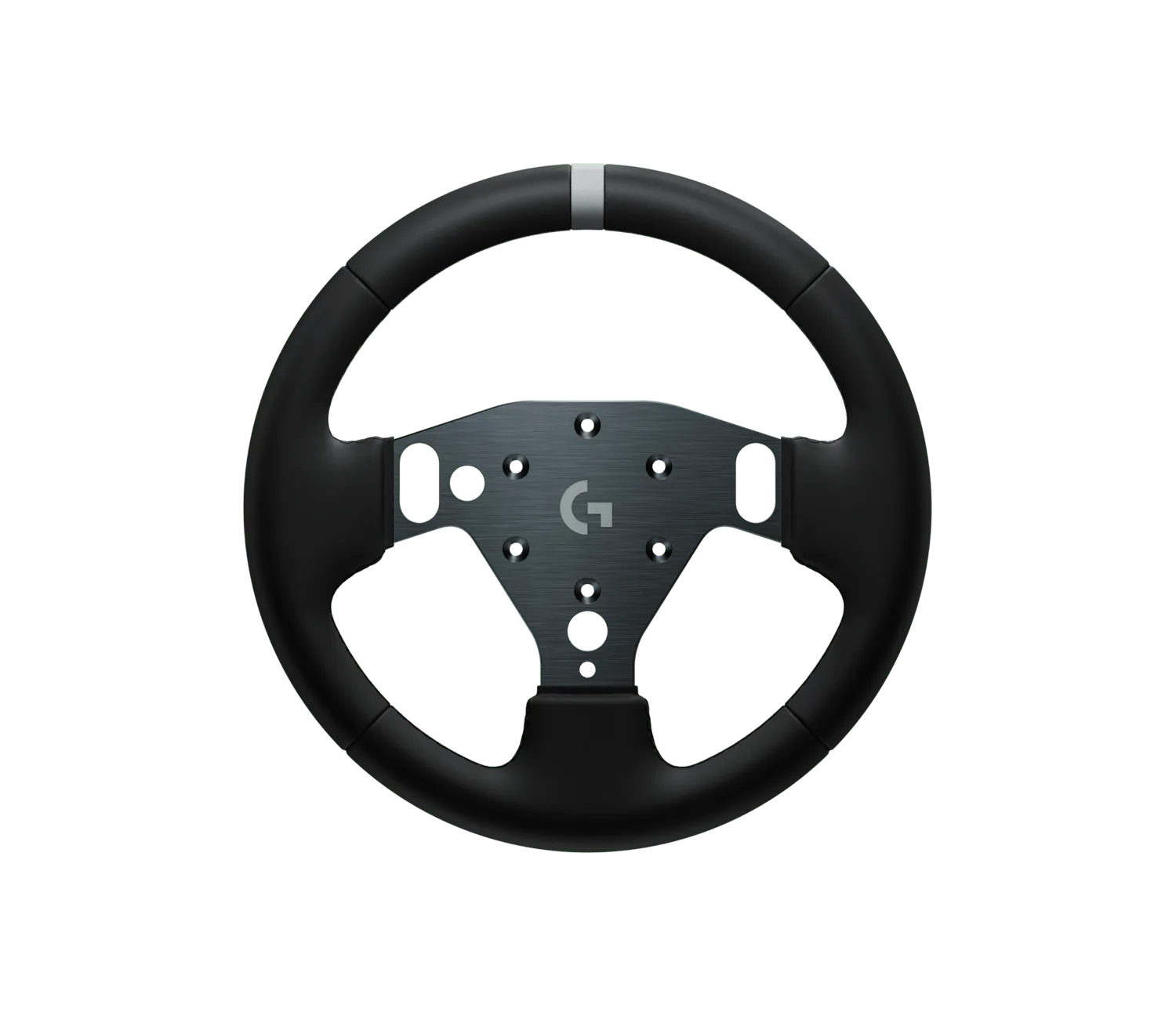
Image: Logitech G. Logitech G RS Round Wheel
The round rim in the RS50 system, bought on top of an RS Wheel Hub.
- What you get
- Rim or handles, no controls, needs a hub
- MSRP
- $69.99
- Platforms
-
- PC Only with another part
- PlayStation Only with another part
- Xbox Only with another part
- Connection
- Only through a wheelbase or hub
-
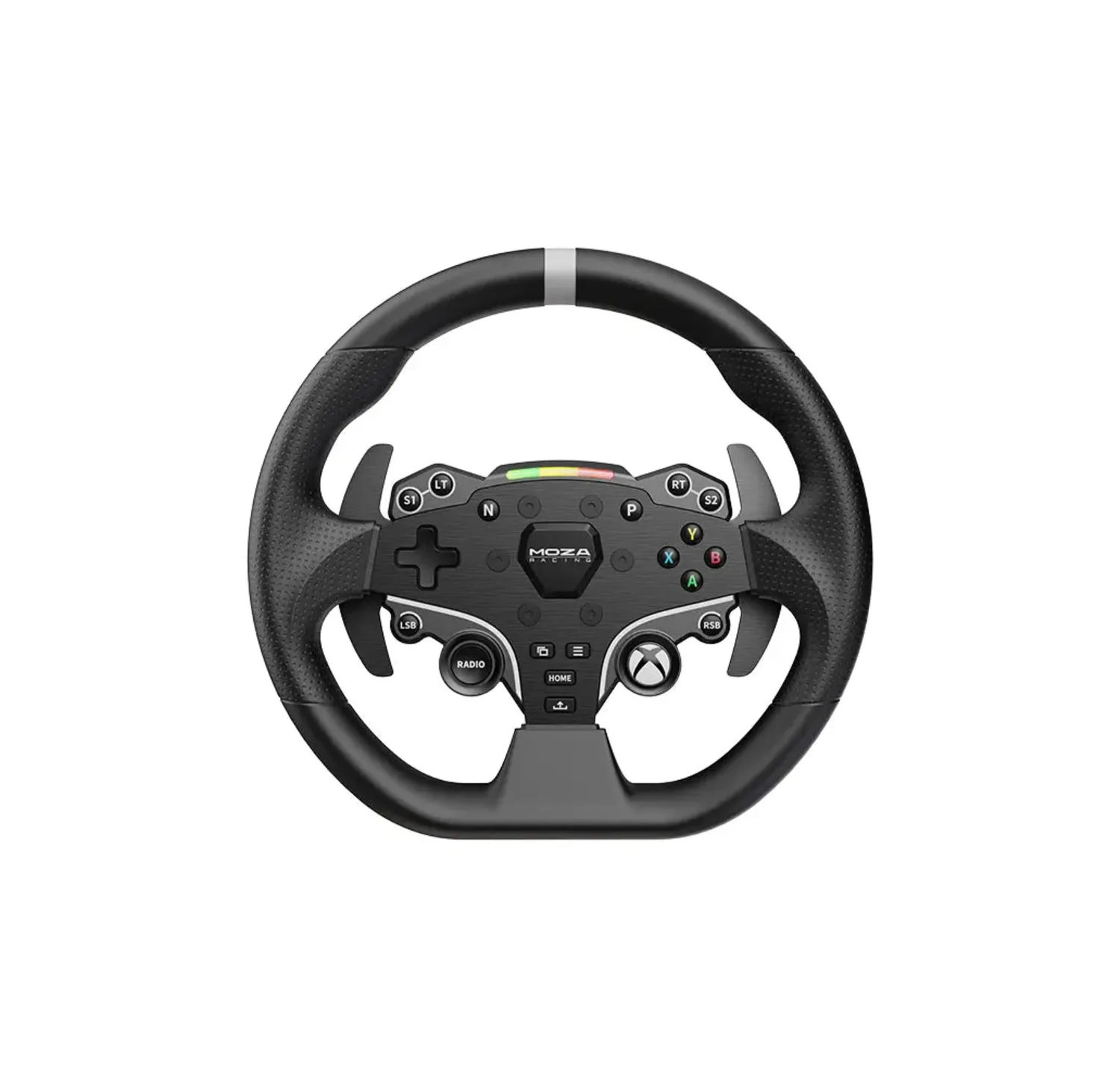
Image: Moza. Moza ESX Wheel
Aluminum entry rim, and Moza's listing puts the Xbox license in the wheel rather than the base.
- What you get
- Wheel with controls and rim
- MSRP
- $139
- Platforms
-
- PC Yes
- PlayStation Listing does not say
- Xbox Yes
- Connection
- Only through a wheelbase or hub
-
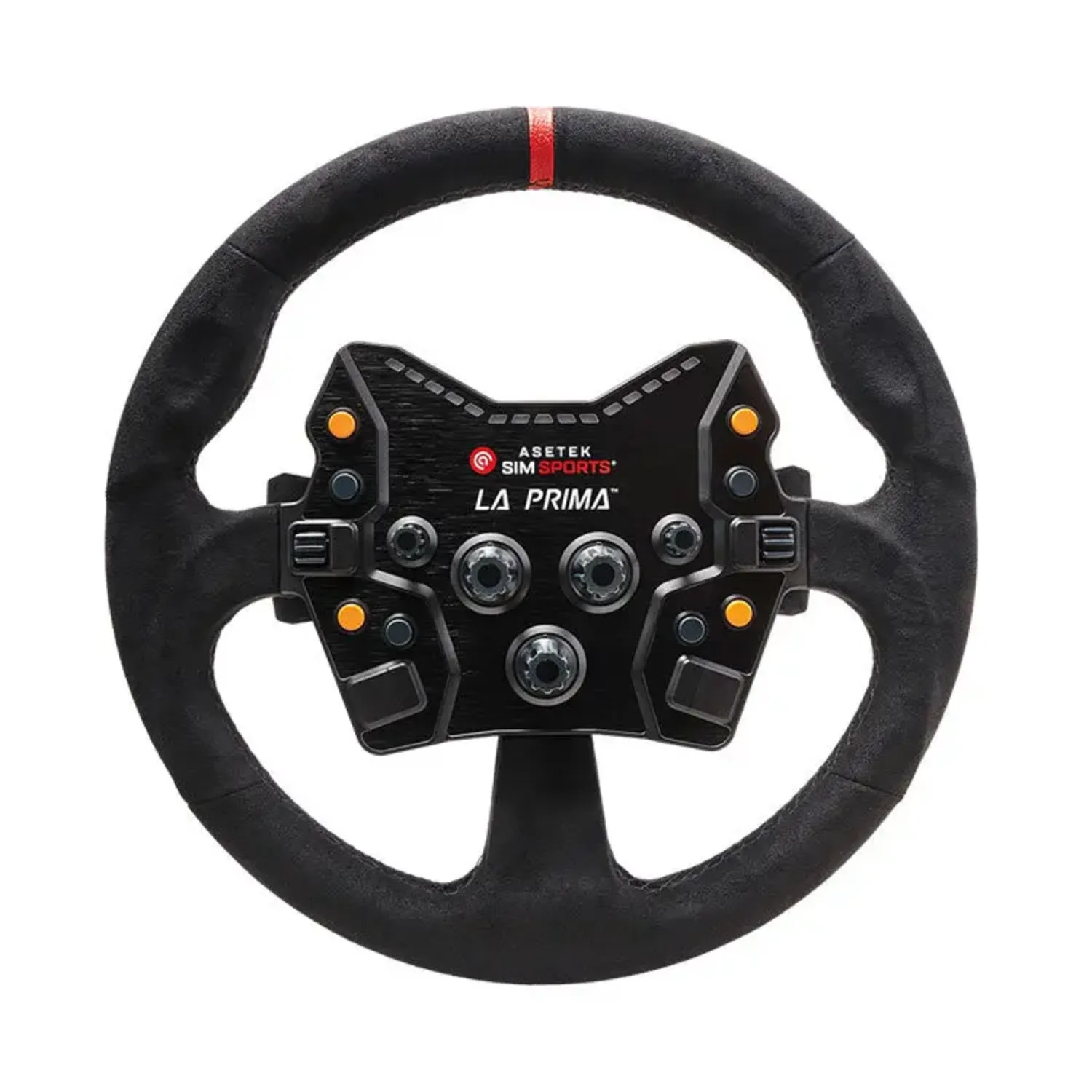
Image: Asetek SimSports. Asetek La Prima GT Button Box
$259.00 for the box, $149.00 for the Comfort+ rim it needs, and on the cheapest $109.00 rim instead it is $368.00, the least Asetek charges for any box-and-grip pair. Two complete Asetek wheels still cost less, the $149.00 Initium and the $349.00 La Prima Formula.
- What you get
- Button hub, no rim
- MSRP
- $259
- Platforms
-
- PC Yes
- PlayStation Listing does not say
- Xbox Listing does not say
- Connection
- Only through a wheelbase or hub
GT: GT3, GT4, touring, prototypes
-
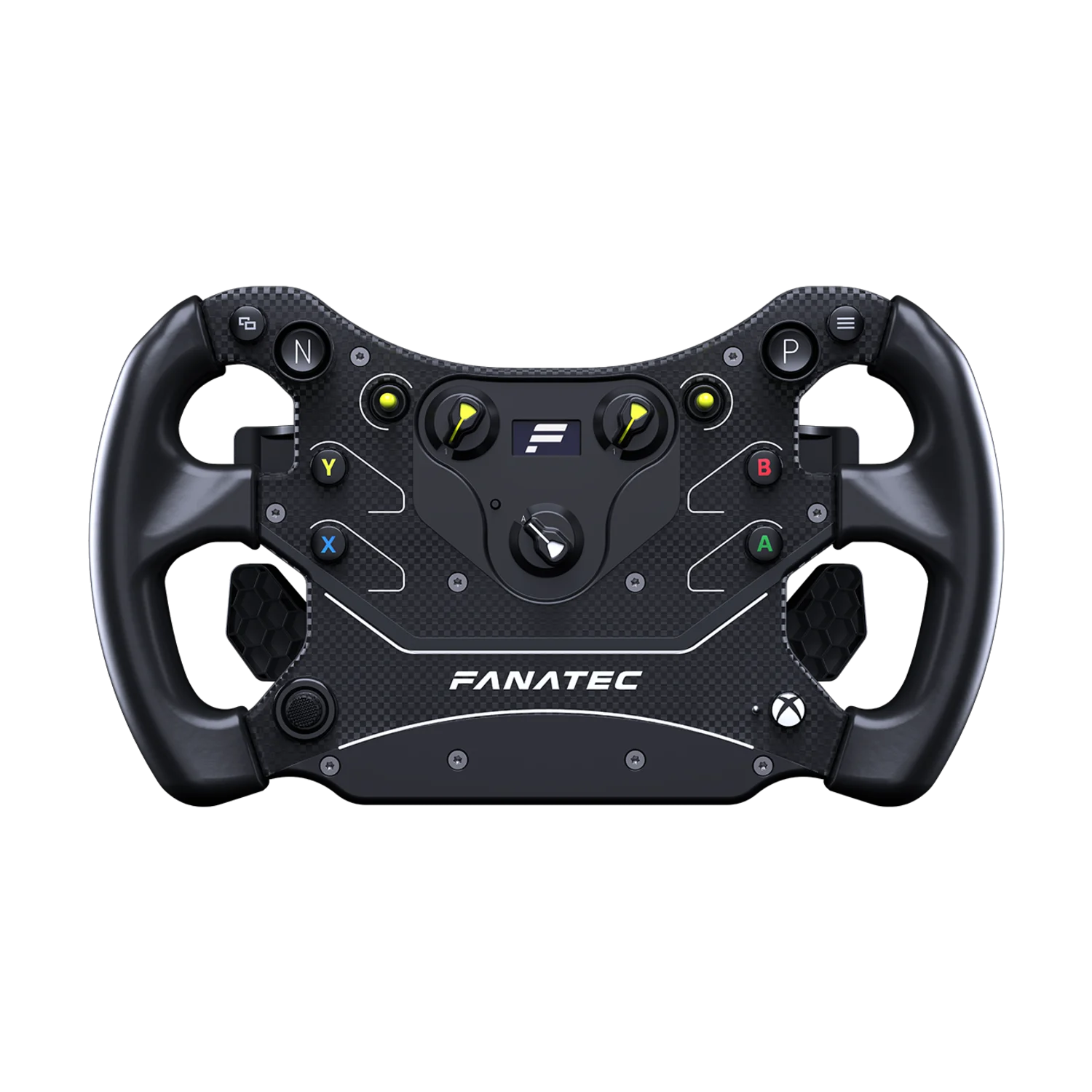
Image: Fanatec. Fanatec CSL Steering Wheel GT3
The cheapest Xbox-tagged card in Fanatec's own US steering-wheel category, with a 1-inch OLED and two analog paddles that can run brake and throttle.
- What you get
- Wheel with controls and rim
- MSRP
- $229.99
- Platforms
-
- PC Yes
- PlayStation Only with another part
- Xbox Yes
- Connection
- Only through a wheelbase or hub
-
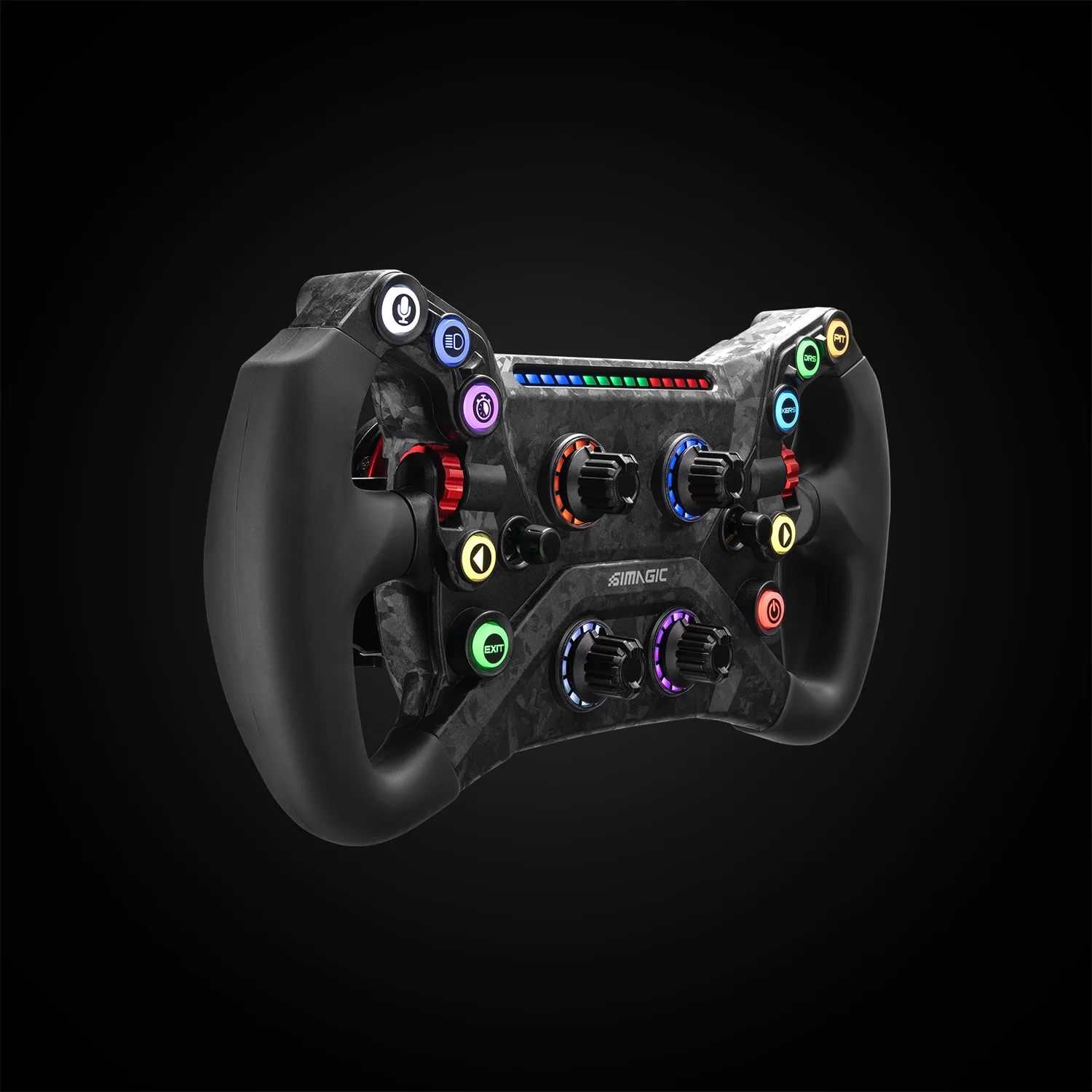
Image: Simagic. Simagic GT Neo
~$240, the value GT pick with magnetic paddles.
- What you get
- Wheel with controls and rim
No product record yet, so this card states no checked price, no platform answer, and no seller link.
-
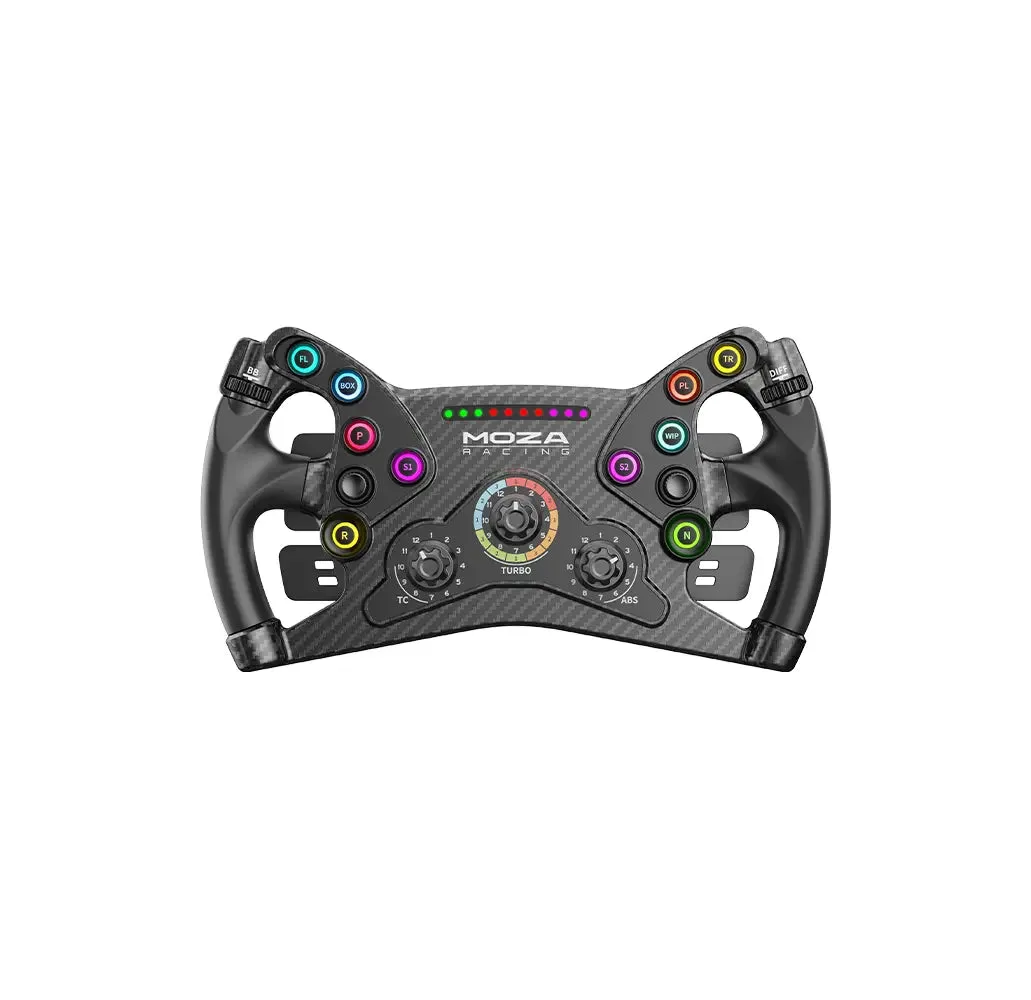
Image: Moza. Moza KS Steering Wheel
A butterfly GT rim with three rotaries, two joysticks, and no screen. Its review covers the $329 KS Pro, which adds one.
- What you get
- Wheel with controls and rim
- MSRP
- $279
- Platforms
-
- PC Yes
- PlayStation Listing does not say
- Xbox Listing does not say
- Connection
- Only through a wheelbase or hub
-
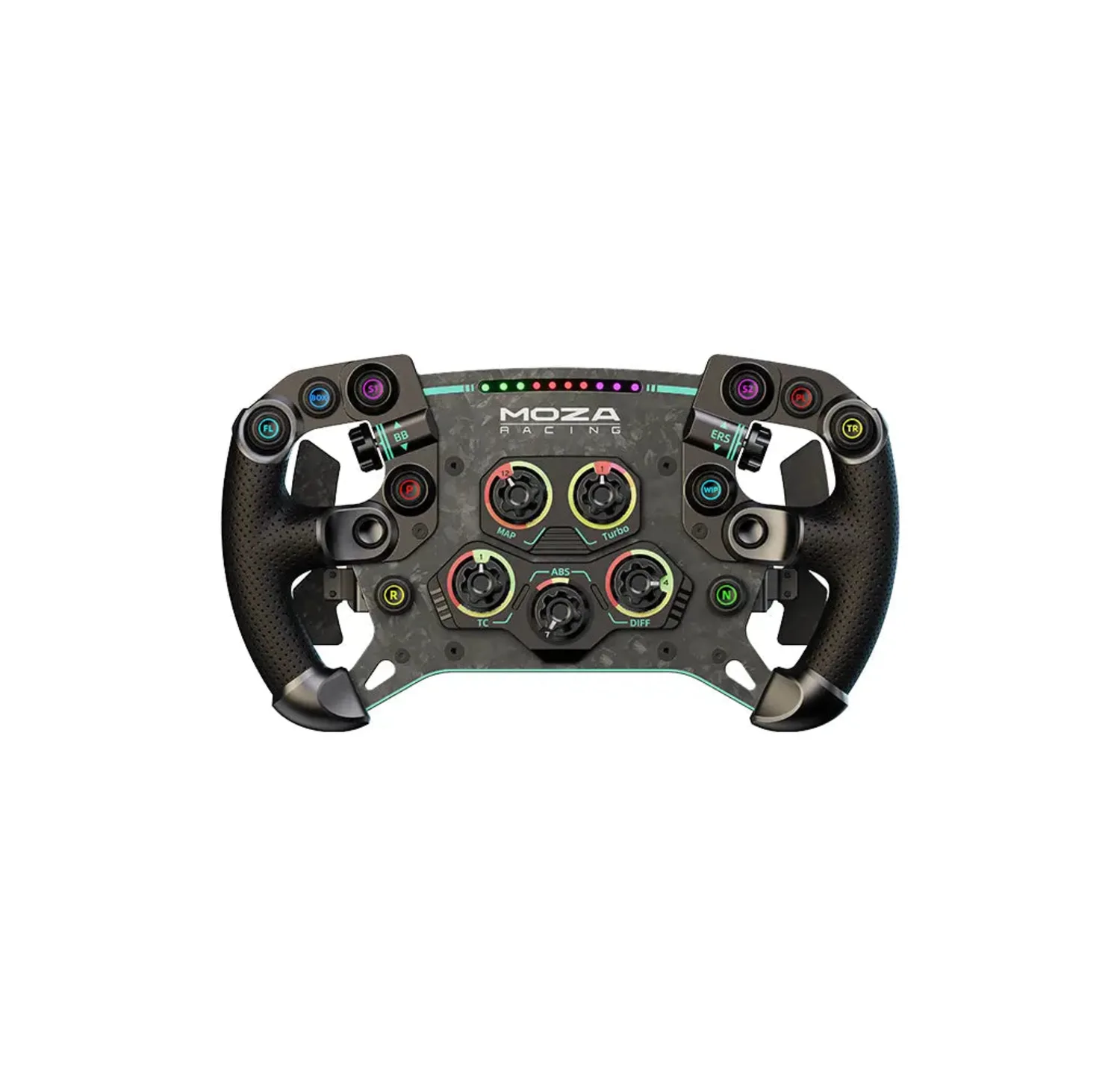
Image: Moza. Moza GS V2P GT Wheel
Forged carbon and leather, a 10-bead rev strip, and no screen in the rim.
- What you get
- Wheel with controls and rim
- MSRP
- $399
- Platforms
-
- PC Listing does not say
- PlayStation Listing does not say
- Xbox Listing does not say
- Connection
- Only through a wheelbase or hub
-
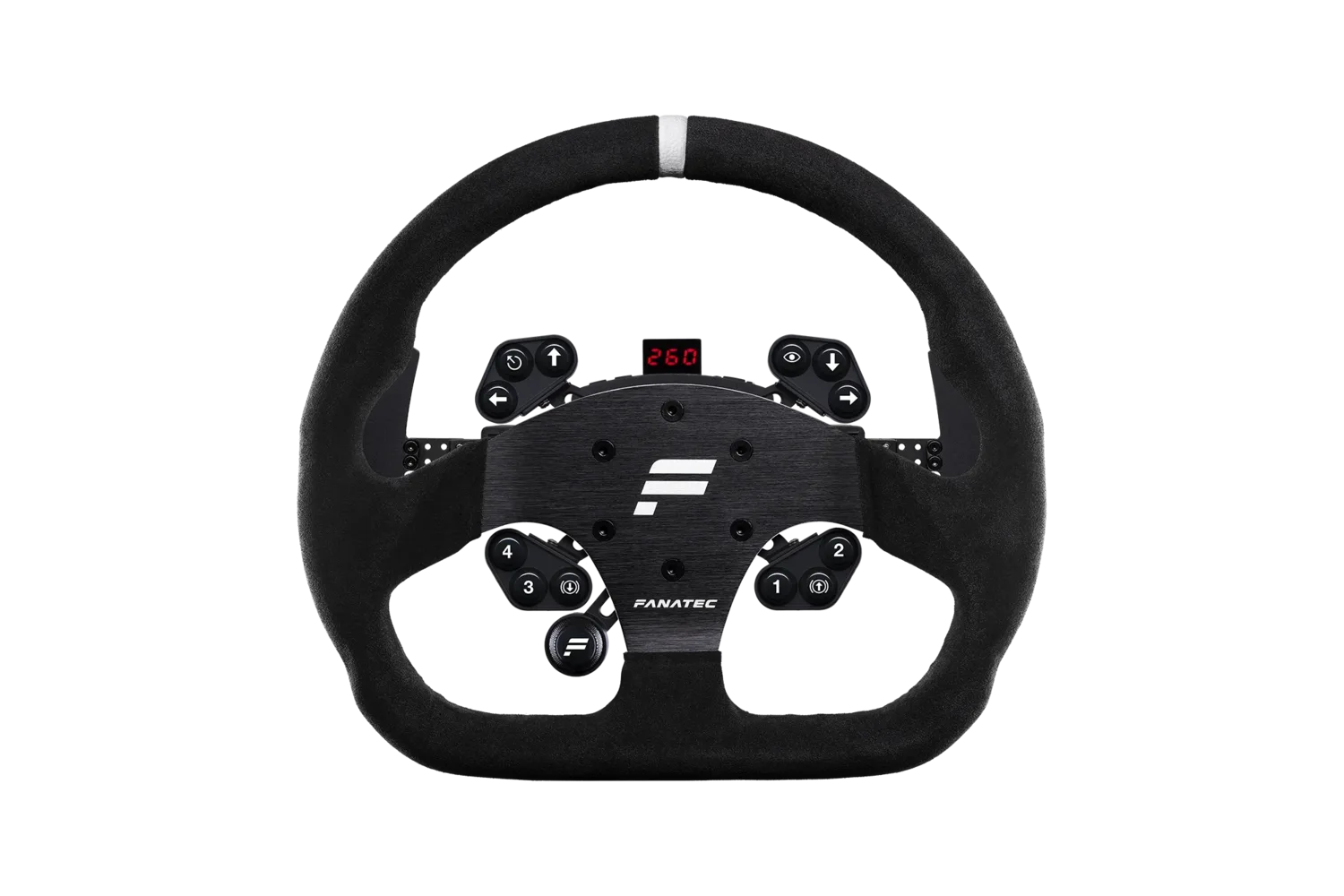
Image: Fanatec. Fanatec ClubSport GT V2
~$515, a rim, the Universal Hub V2, and a QR2 wheel-side at one price.
- What you get
- Wheel with controls and rim
No product record yet, so this card states no checked price, no platform answer, and no seller link.
-
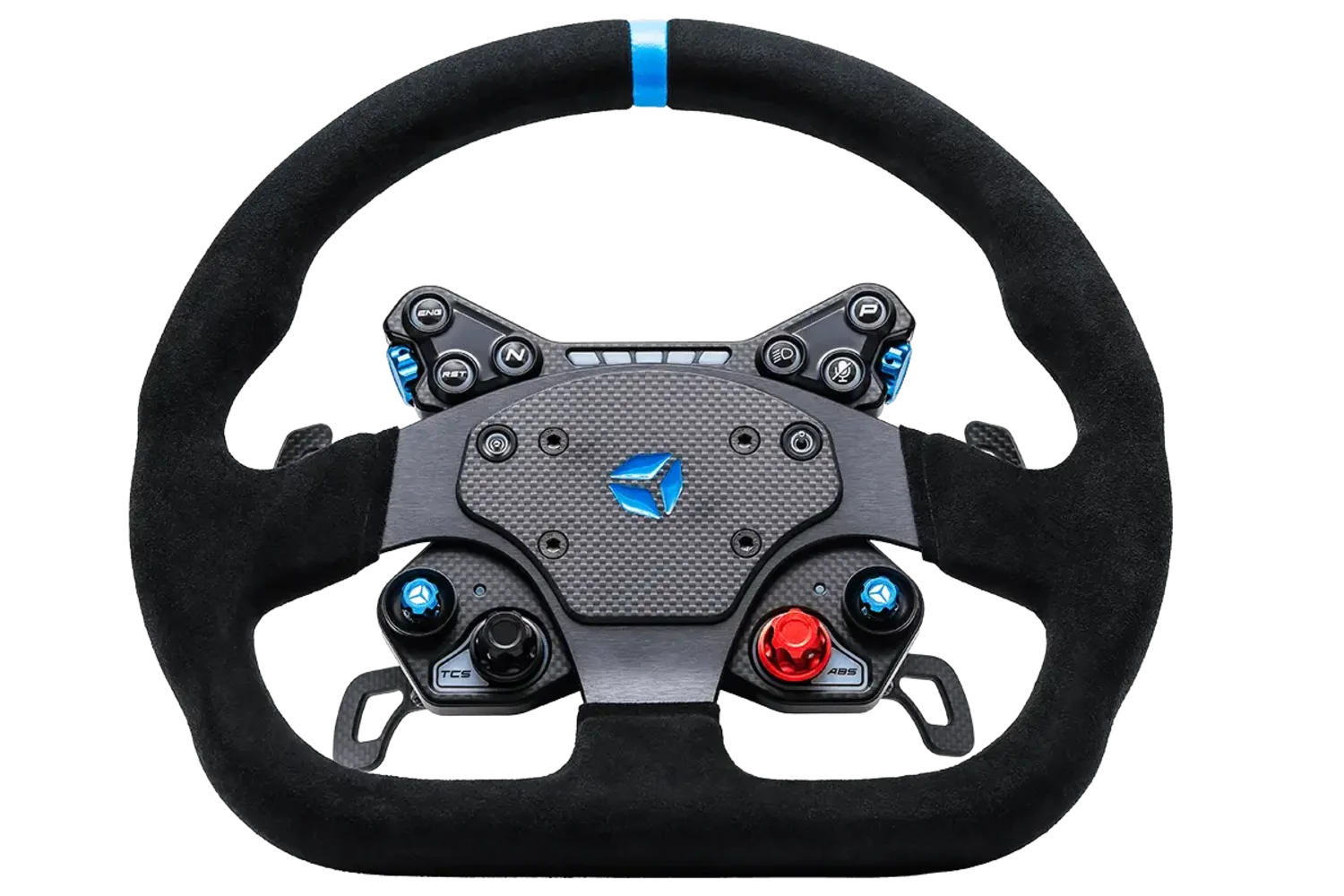
Image: Cube Controls. Cube Controls GT Pro V2
~$899, hand-built carbon with a cross-brand quick-release.
- What you get
- Wheel with controls and rim
No product record yet, so this card states no checked price, no platform answer, and no seller link.
-
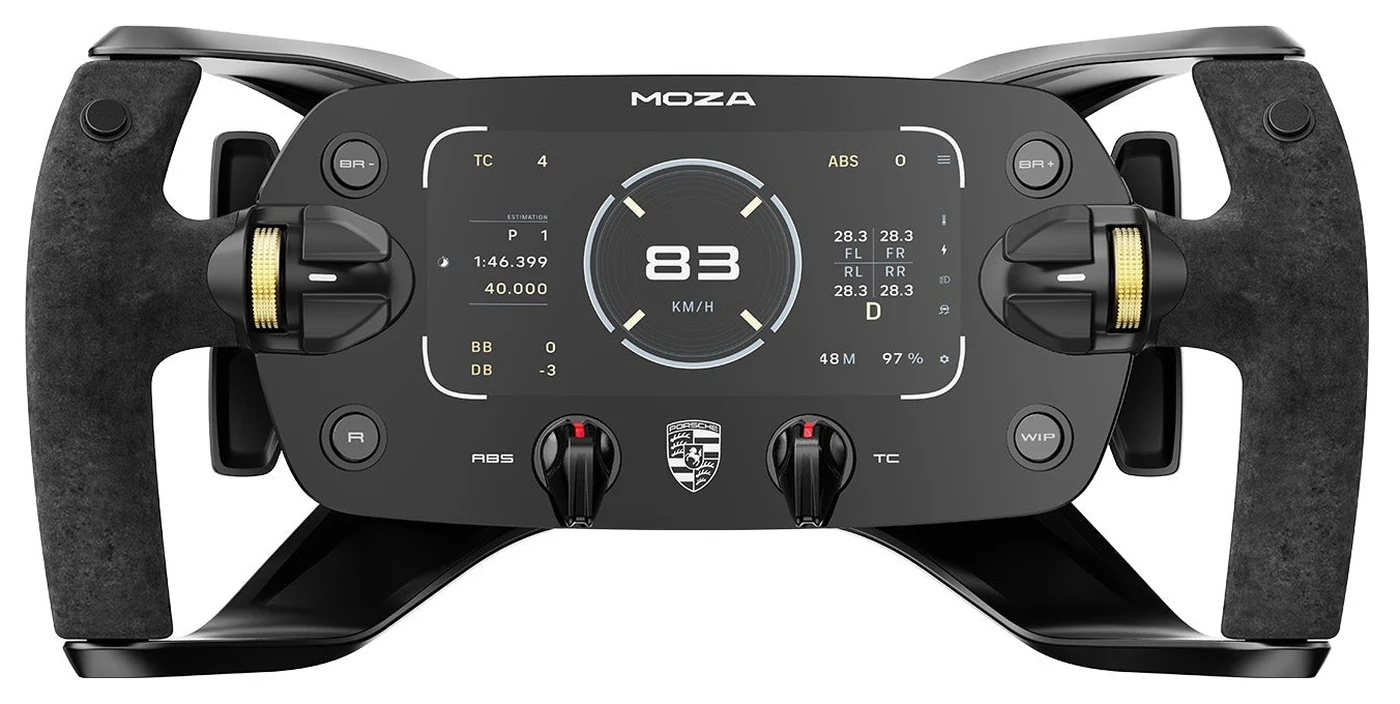
Image: Moza. Moza Porsche Mission R Steering Wheel
MOZA's Porsche-licensed replica, and the largest screen it puts on a rim at 5.4 inches.
- What you get
- Wheel with controls and rim
- MSRP
- $1,299
- Platforms
-
- PC Only with another part
- PlayStation Listing does not say
- Xbox Listing does not say
- Connection
- Only through a wheelbase or hub
Formula: open-wheel
-
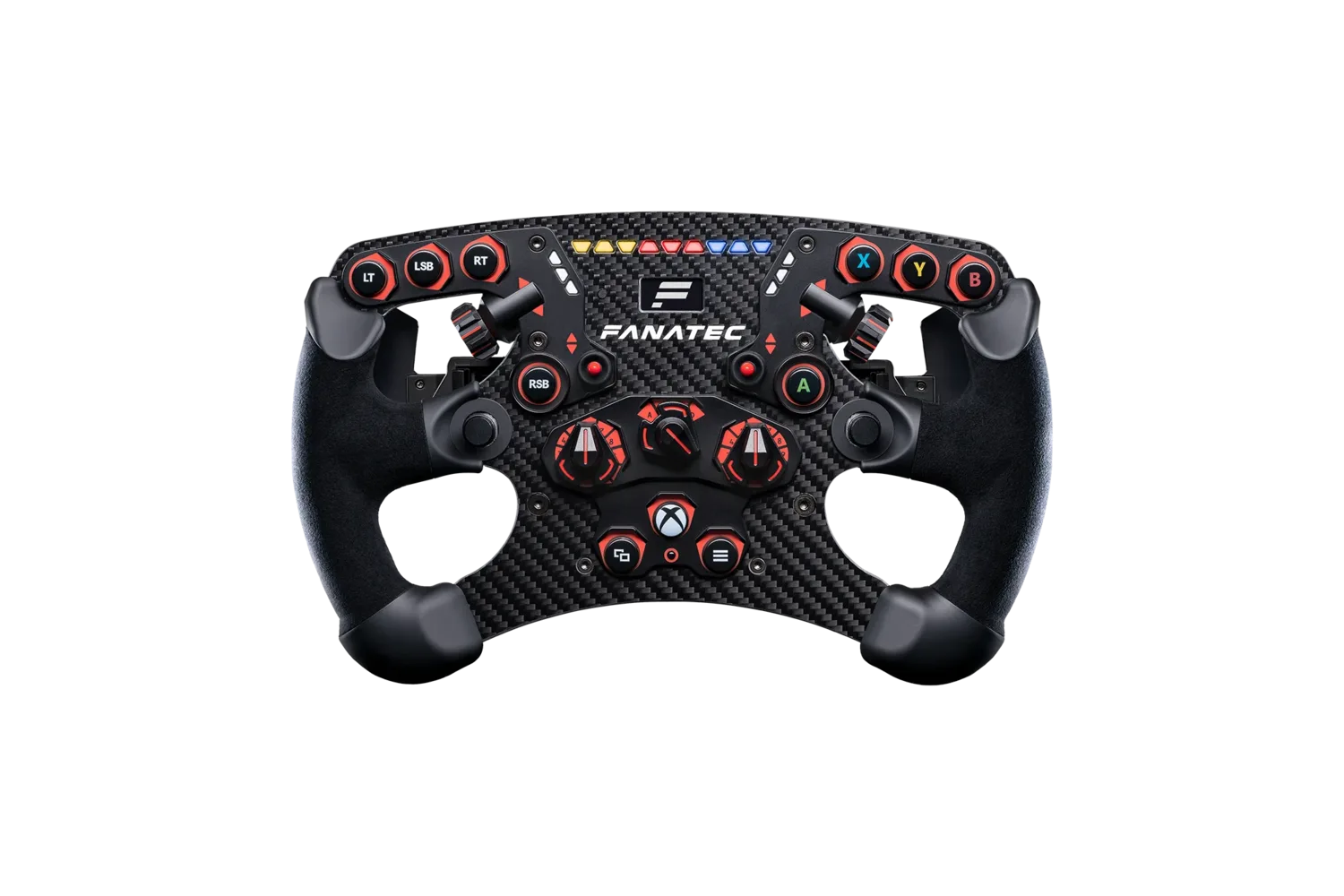
Image: Fanatec. Fanatec ClubSport Steering Wheel Formula V2.5 X
The Xbox formula wheel in Fanatec's range, and the only one. Its review covers the leather-grip V2.5 it replaced and the cheaper V3 that replaced it.
- What you get
- Wheel with controls and rim
- MSRP
- $439.99
- Platforms
-
- PC Yes
- PlayStation Only with another part
- Xbox Yes
- Connection
- Only through a wheelbase or hub
-
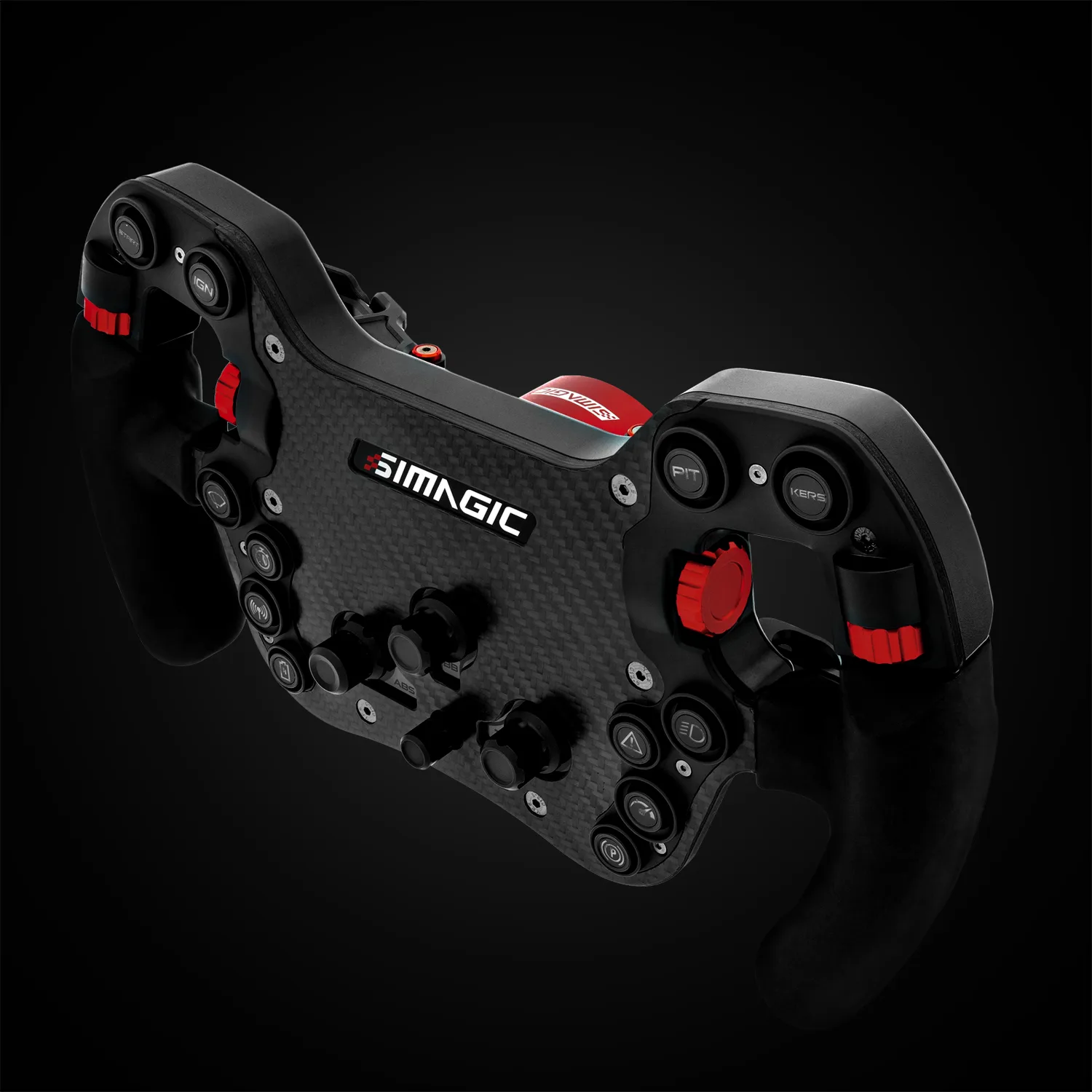
Image: Simagic. FX Formula Steering Wheel
The FX Pro's shape and diameter without its screen, two of its rotary encoders, or its clutch paddles.
- What you get
- Wheel with controls and rim
- MSRP
- $359
- Platforms
-
- PC Listing does not say
- PlayStation Listing does not say
- Xbox Listing does not say
- Connection
- Only through a wheelbase or hub
-
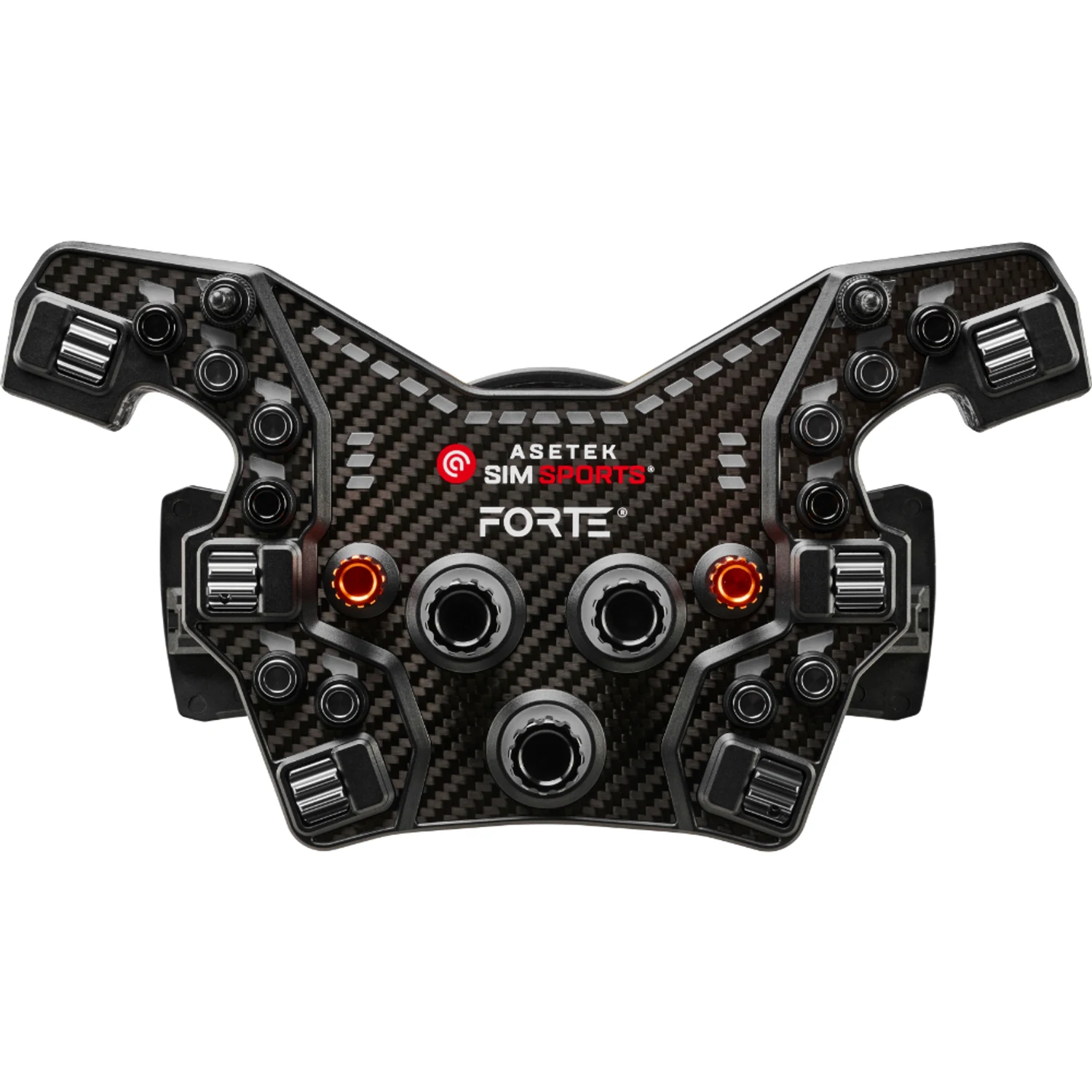
Image: Asetek Racing. Asetek Forte Formula Button Box (Black, Aluminum)
The $529 Forte Formula's published controls in black and aluminum with no grips, so $89 of handles is a second purchase and the usable total is $39 over the finished wheel.
- What you get
- Button hub, no rim
- MSRP
- $479
- Platforms
-
- PC Yes
- PlayStation Listing does not say
- Xbox Listing does not say
- Connection
- Only through a wheelbase or hub
-
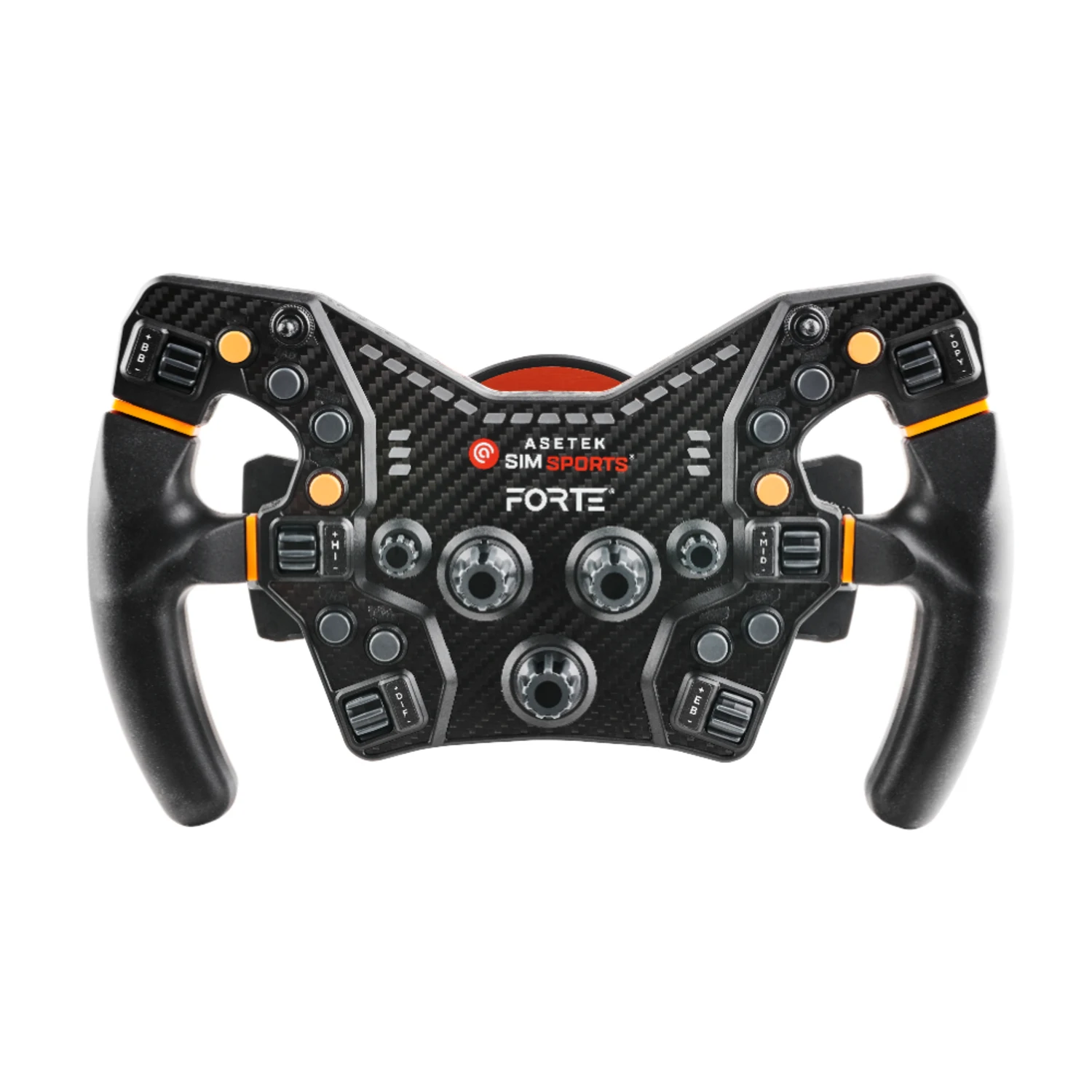
Image: Asetek Racing. Asetek Forte Formula Steering Wheel
The one Forte Formula that arrives ready to grip: 290mm on the Regular handles Asetek fits as the default, with no screen.
- What you get
- Wheel with controls and rim
- MSRP
- $529
- Platforms
-
- PC Yes
- PlayStation Listing does not say
- Xbox Listing does not say
- Connection
- Only through a wheelbase or hub
-
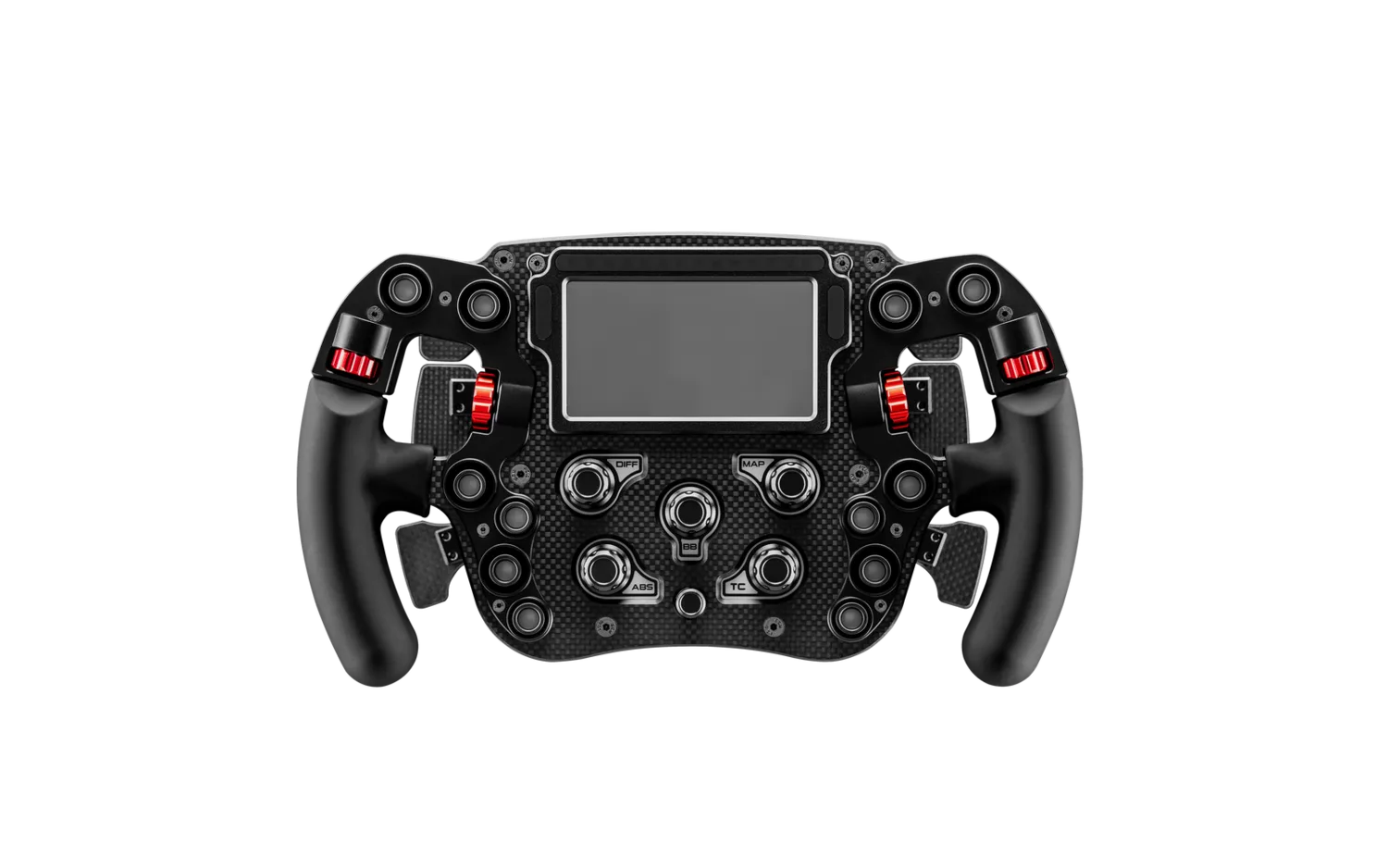
Image: Simagic. Simagic FX Pro
~$549, an F1-style wheel with a 4.3-inch LCD.
- What you get
- Wheel with controls and rim
No product record yet, so this card states no checked price, no platform answer, and no seller link.
-
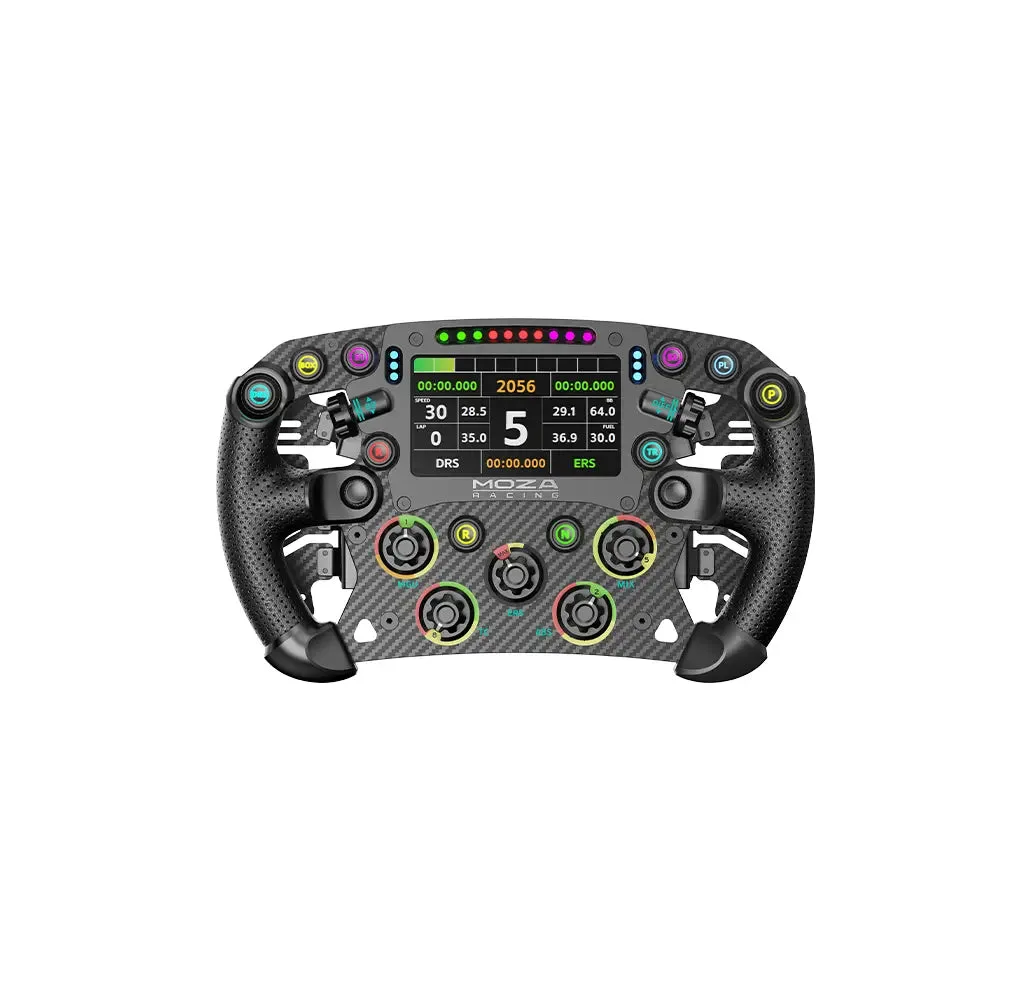
Image: Moza. Moza FSR2 Formula Wheel
A carbon formula rim with a 4.3-inch telemetry touchscreen and six magnetic paddles.
- What you get
- Wheel with controls and rim
- MSRP
- $649
- Platforms
-
- PC Listing does not say
- PlayStation Listing does not say
- Xbox Listing does not say
- Connection
- Only through a wheelbase or hub
-
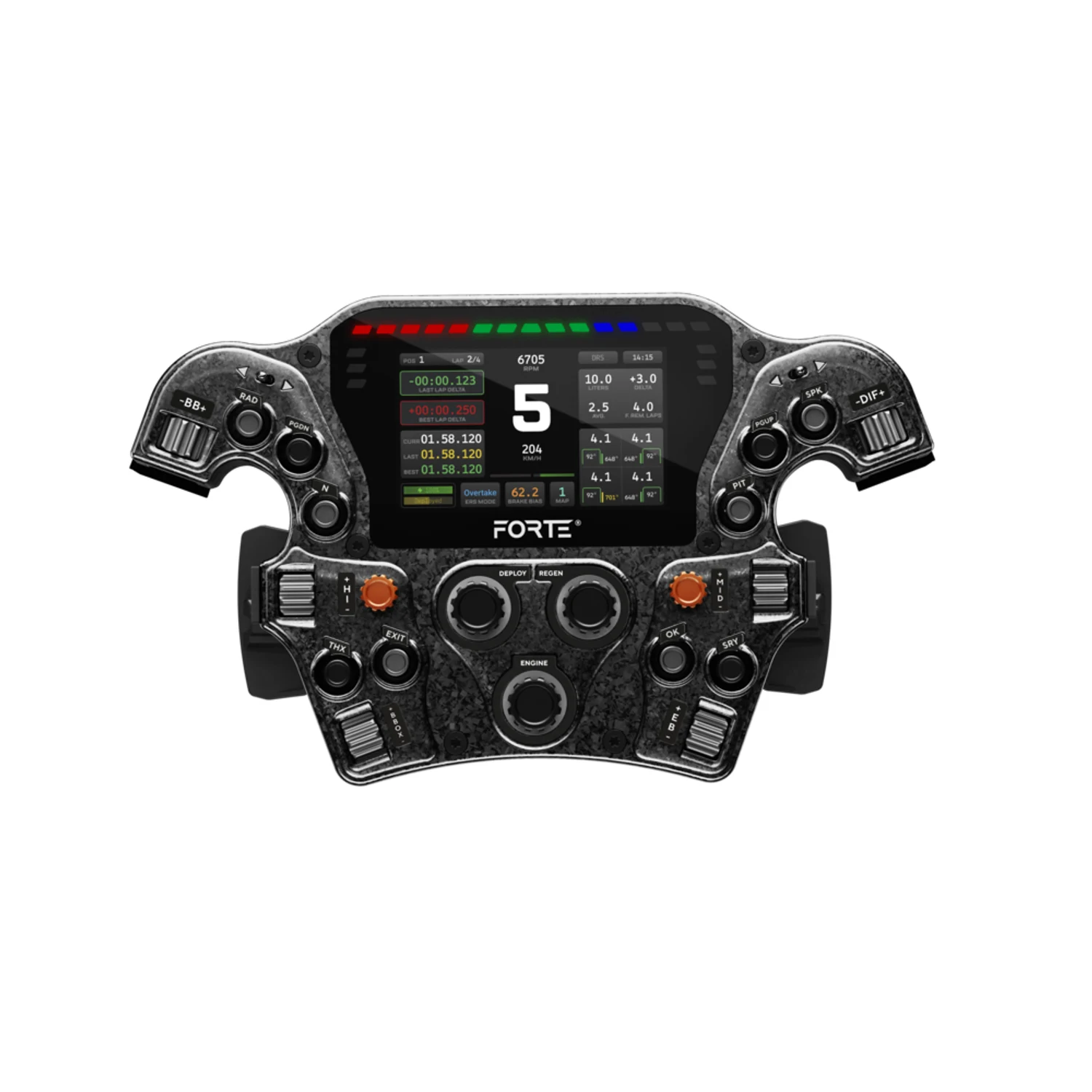
Image: Asetek Racing. Asetek Forte Formula Pro Steering Wheel
A 4.3-inch 800x480 touch panel on a forged-carbon formula body, and the only Forte Formula Asetek publishes a third-party-base route for. No grips in the box.
- What you get
- Button hub, no rim
- MSRP
- $649
- Platforms
-
- PC Yes
- PlayStation Listing does not say
- Xbox Listing does not say
- Connection
- Only through a wheelbase or hub
-
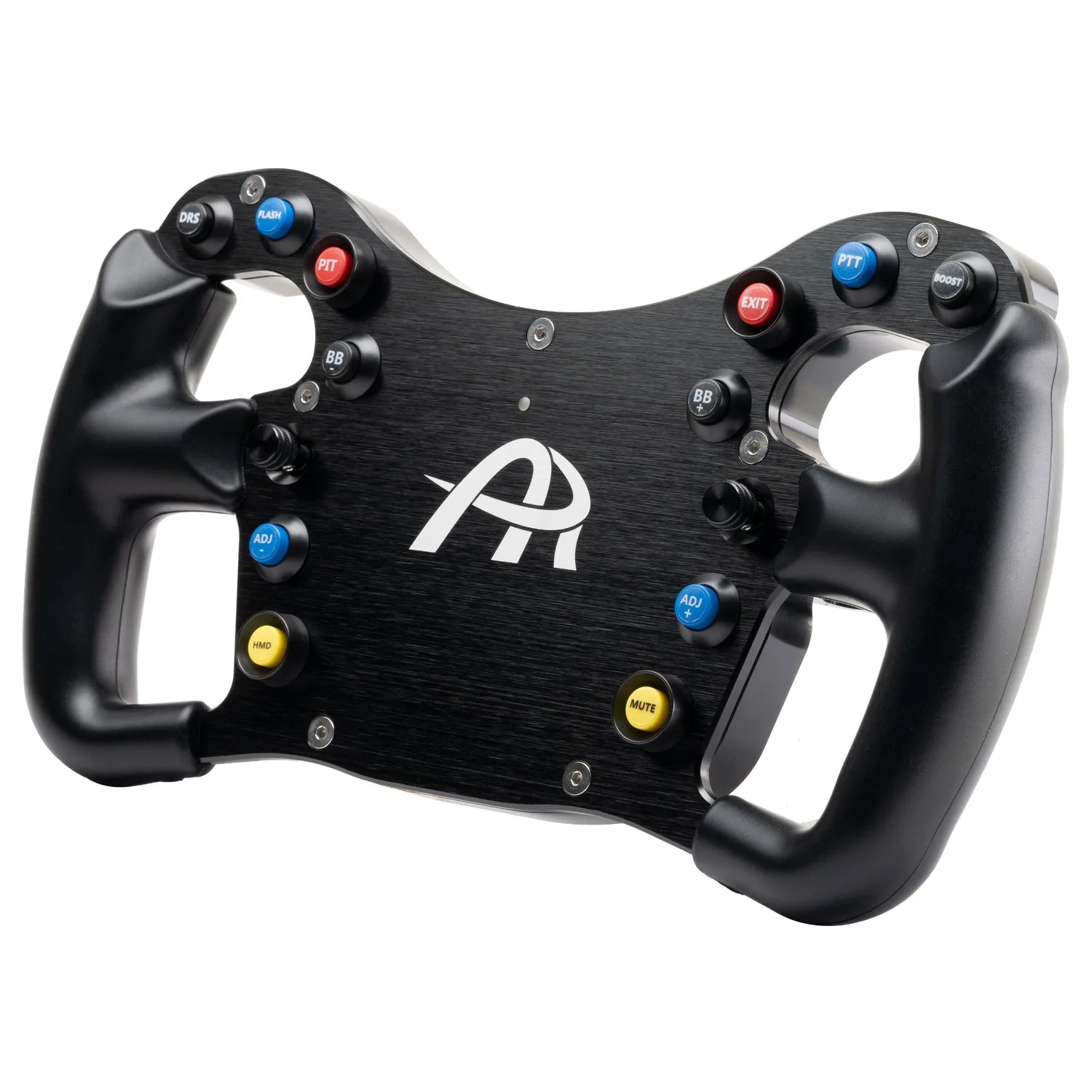
Image: Ascher Racing. Ascher Racing F28-SC V2
~$905, wireless over a Simucube 2 quick release, with no clutch or analog paddles.
- What you get
- Wheel with controls and rim
No product record yet, so this card states no checked price, no platform answer, and no seller link.
-
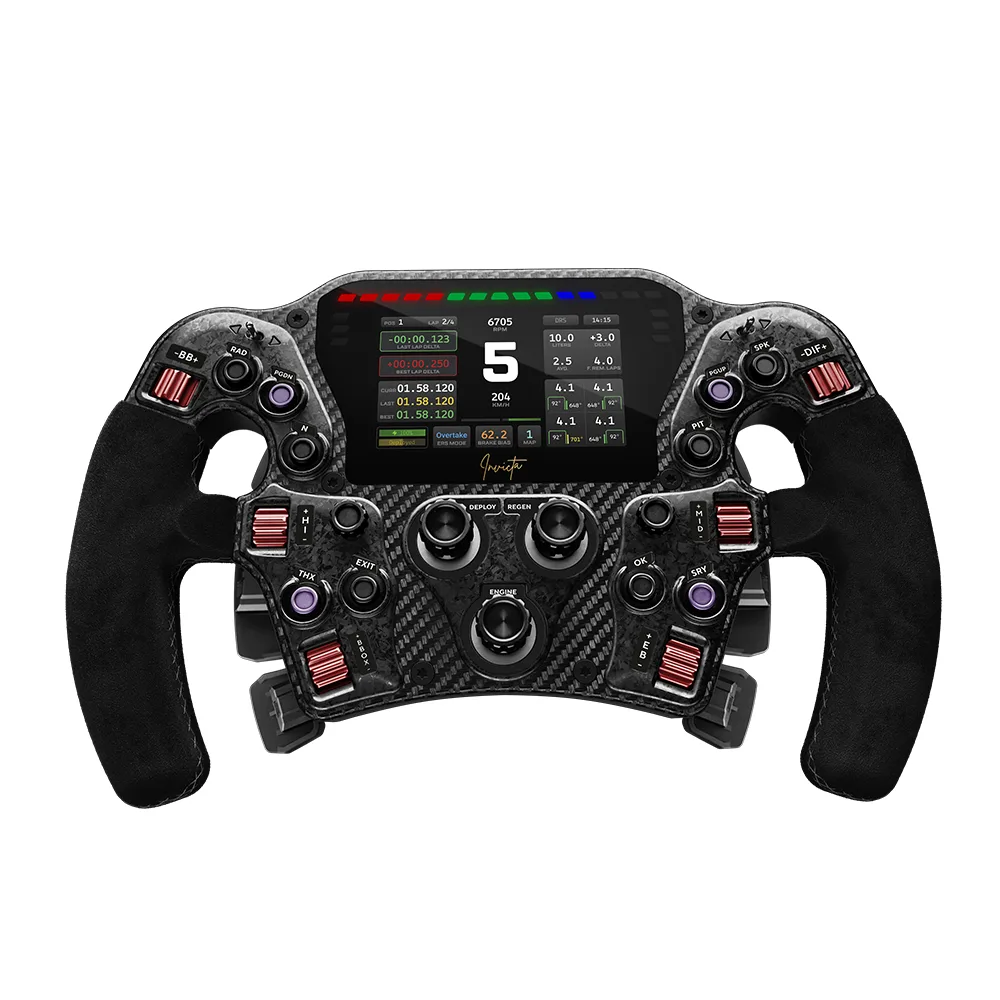
Image: Asetek Racing. The handles shown are not included; Asetek prints "Note: Handles are sold separately" on this listing. Asetek Invicta Formula Button Box
Asetek's only Invicta steering-wheel product, and the dearest button box it sells: a 4.3-inch touch panel and six paddles, with no grips and a $129 adapter in front of an Asetek base.
- What you get
- Button hub, no rim
- MSRP
- $1,249.99
- Platforms
-
- PC Yes
- PlayStation Listing does not say
- Xbox Listing does not say
- Connection
- Only through a wheelbase or hub
-
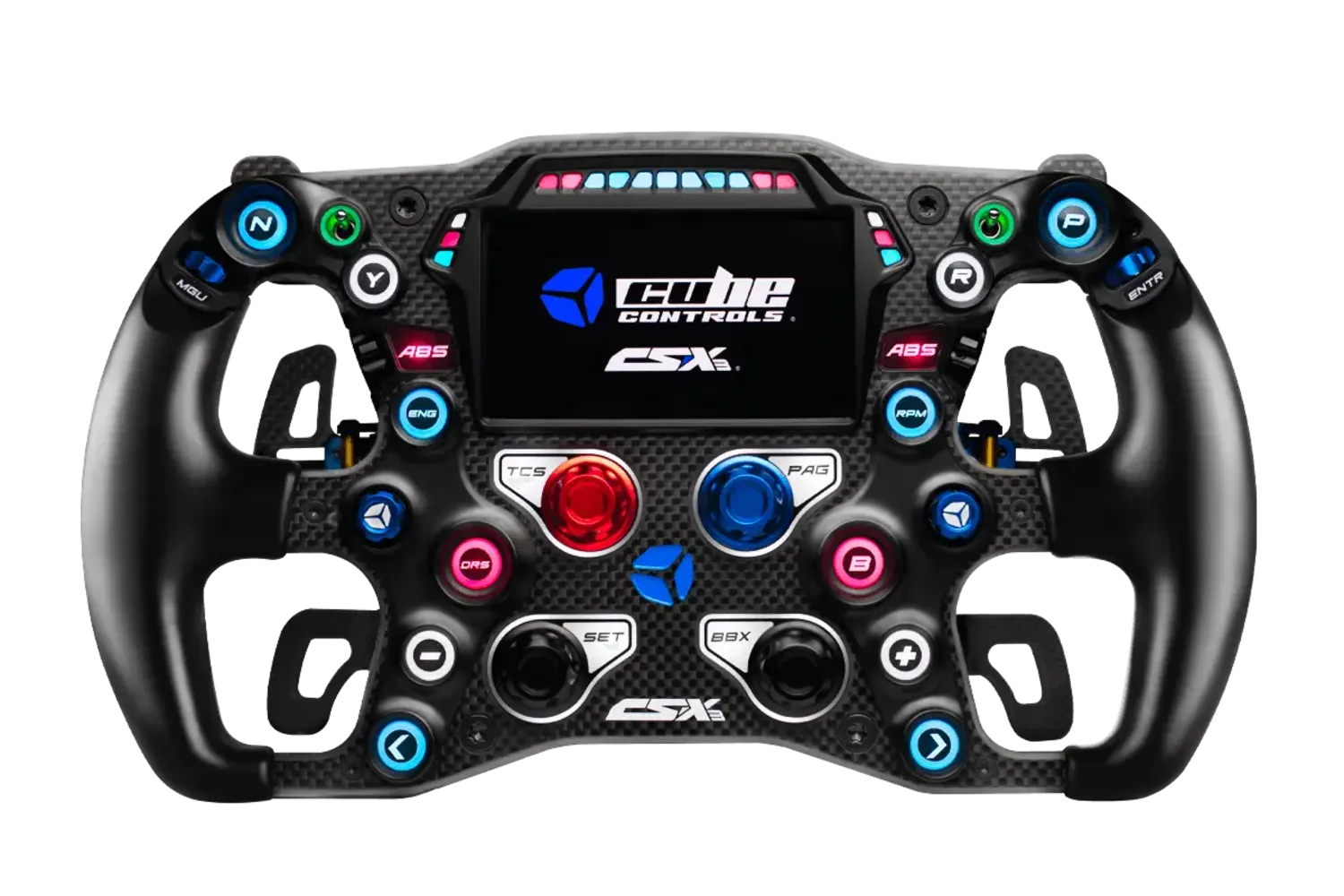
Image: Cube Controls. Cube Controls CSX-3
~$1,480, the no-compromise carbon halo wheel.
- What you get
- Wheel with controls and rim
No product record yet, so this card states no checked price, no platform answer, and no seller link.
-
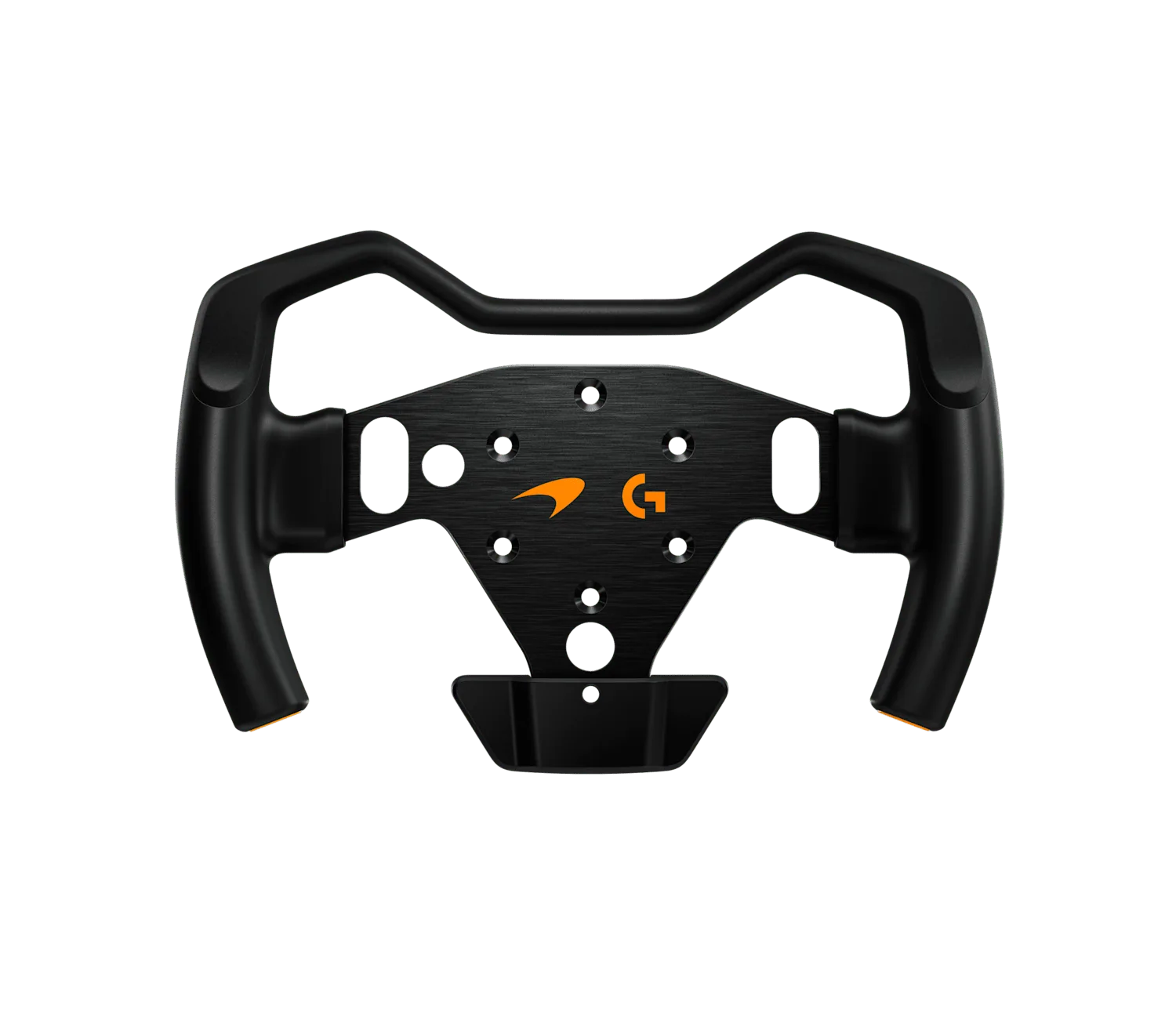
Image: Logitech G. Logitech G RS Formula Wheel McLaren Racing Edition
The McLaren-livery formula shape for the RS stack, and the only formula entry here with no controls on it.
- What you get
- Rim or handles, no controls, needs a hub
- MSRP
- $129.99
- Platforms
-
- PC Listing does not say
- PlayStation Listing does not say
- Xbox Listing does not say
- Connection
- Only through a wheelbase or hub
Hubs: controls sold without a rim
-
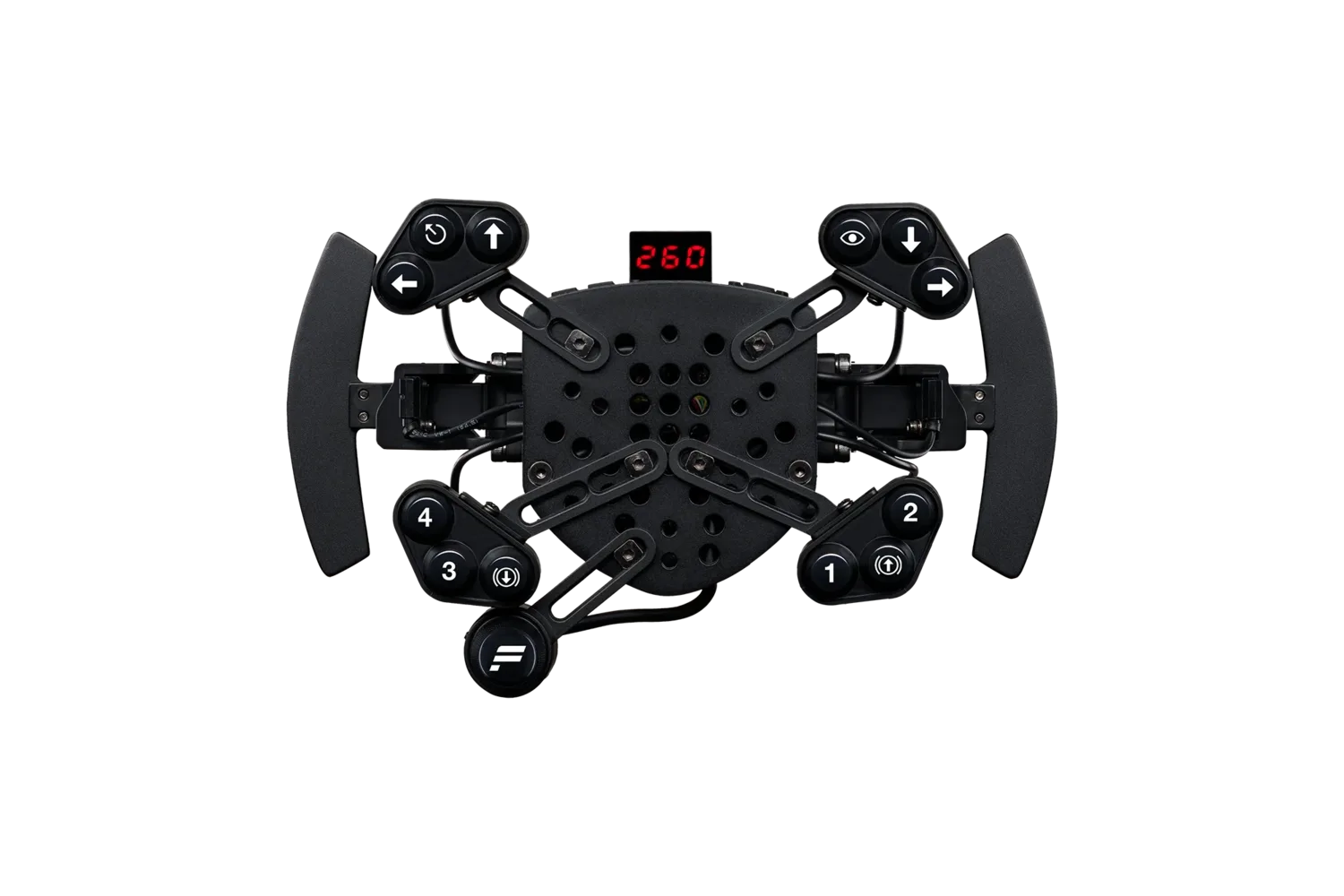
Image: Fanatec. Fanatec ClubSport Universal Hub V2
~$370, turns any 6x70mm round or GT rim into a smart Fanatec wheel.
- What you get
- Button hub, no rim
No product record yet, so this card states no checked price, no platform answer, and no seller link.
-
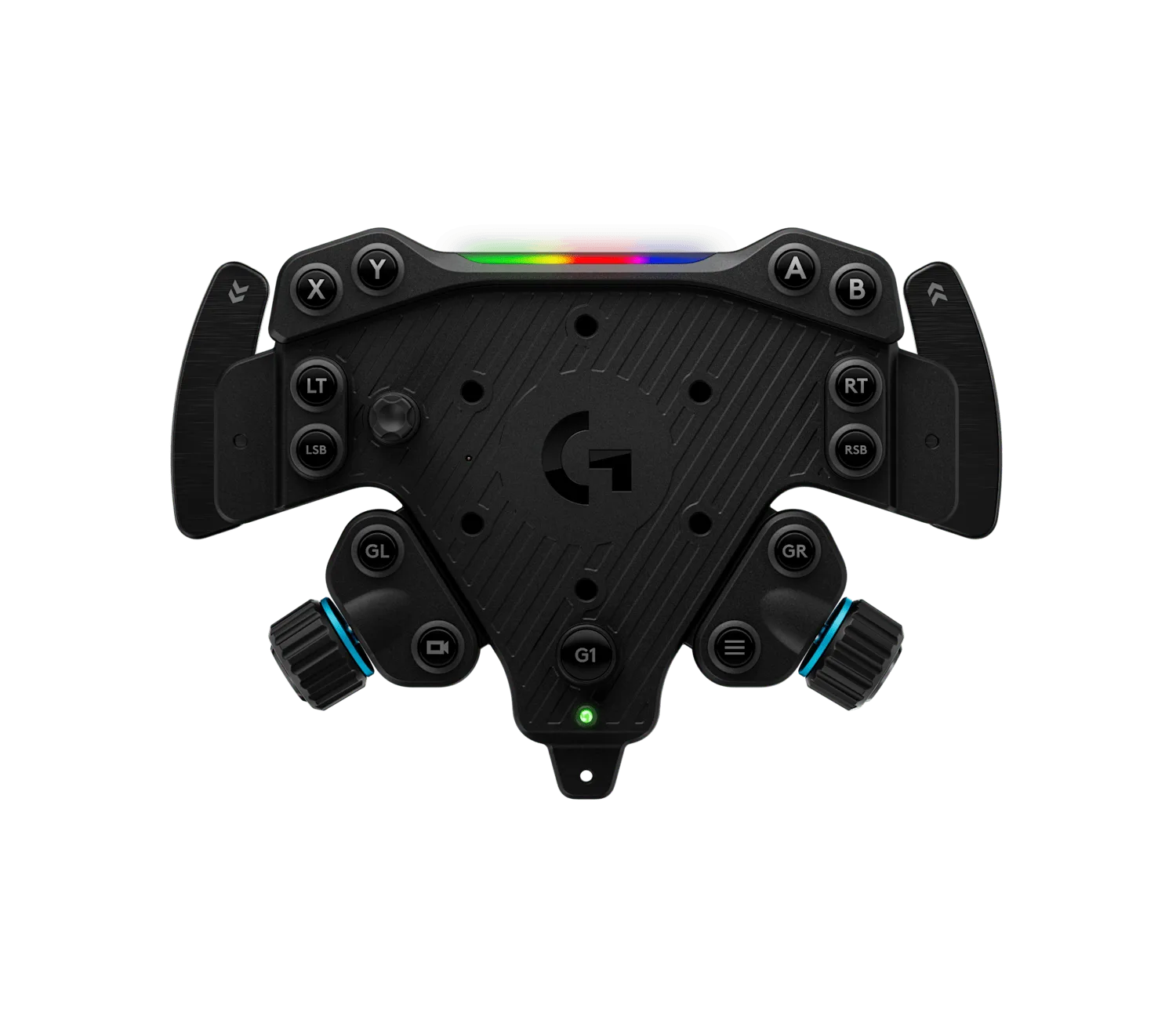
Image: Logitech G. Logitech G RS Wheel Hub
The quick release and the controls in Logitech's RS stack, over the five rims Logitech names for it.
- What you get
- Button hub, no rim
- MSRP
- $149.99
- Platforms
-
- PC Yes
- PlayStation Only with another part
- Xbox Yes
- Connection
- Only through a wheelbase or hub
-
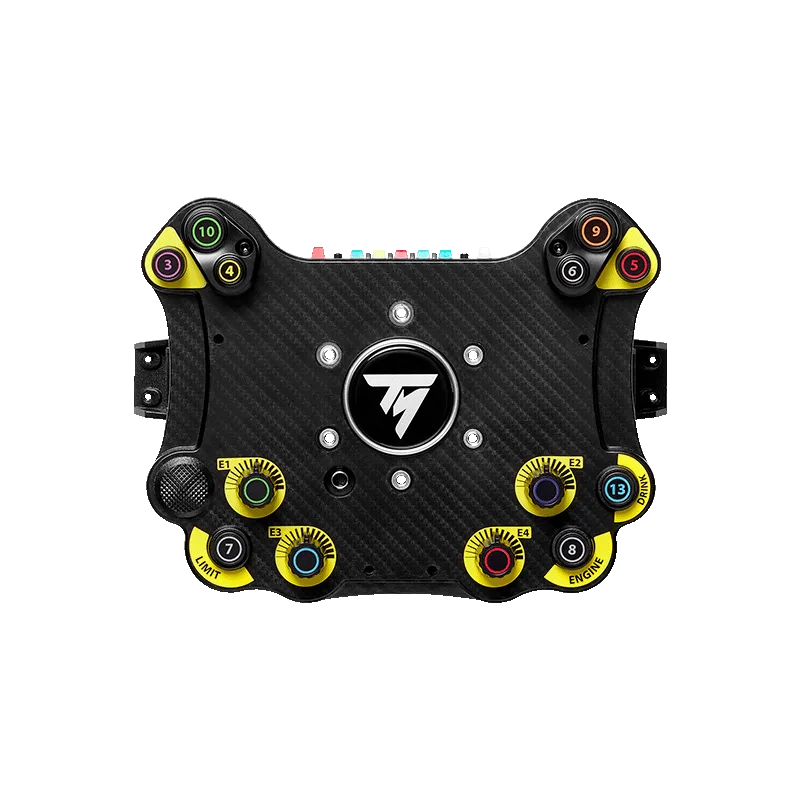
Image: Thrustmaster. EVO Racing Hub
$199.99 for 25 buttons, 7 LEDs, and both Thrustmaster quick-release fittings, over three EVO rims on a 58 mm pitch circle.
- What you get
- Button hub, no rim
- MSRP
- $199.99
- Platforms
-
- PC Yes
- PlayStation Yes
- Xbox Yes
- Connection
- Only through a wheelbase or hub
-
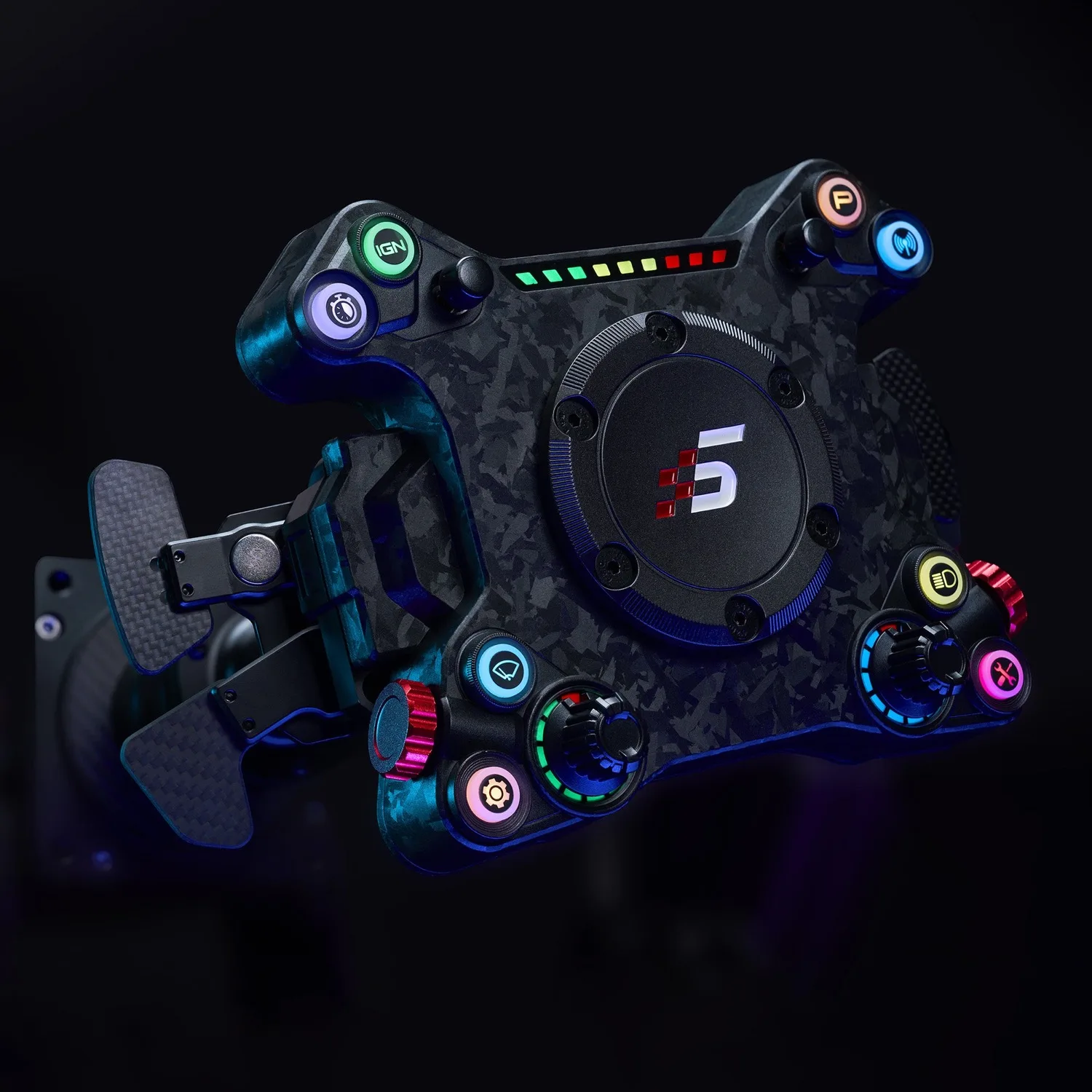
Image: Simagic. Neo X Hub
$199.00 for the controls and the QR50, with the rim and the paddle module sold beside it on the same listing.
- What you get
- Button hub, no rim
- MSRP
- $199
- Platforms
-
- PC Listing does not say
- PlayStation Listing does not say
- Xbox Listing does not say
- Connection
- Only through a wheelbase or hub
Every card links a review of that model. No hardware on this site has been used by hand. A card showing an MSRP is showing the manufacturer’s regular list price, read off the listing it links on the date beside it, before tax, shipping, and any sale. A platform answer is the manufacturer’s own, quoted and dated on that model’s own page, and “Listing does not say” means the manufacturer names that machine nowhere on the page rather than that the wheel fails on it. A card with no product record behind it states what kind of product it is, read off that model’s own review, plus the one-line judgment this page makes, and where that line gives a rough price it is this site’s own reading with no check date behind it. A seller link goes to a store, and a store can show a current product sold out or price it below the figure above. Four of the seven rough figures above are sale prices, and each of those four reviews says so beside a higher regular price: the Simagic GT Neo, the Fanatec ClubSport GT V2, the Simagic FX Pro, and the Fanatec ClubSport Universal Hub V2. A recorded card never shows a sale price, so a rough figure and an MSRP a few dollars apart are not the same purchase. Recounted 2026-08-02, when the Fanatec ClubSport Formula V2.5 X left this group for the recorded one and its own "~$390" turned out to be a sale Fanatec had ended. Recounted again 2026-08-04, when the Asetek La Prima left it the same way: 7 rough and 18 recorded across 25 cards, counted by parsing this file's own frontmatter rather than by decrementing the 8. That card's "~$415" was not a sale but an error, $7.00 above the $408.00 its two Asetek listings actually add up to, and the two figures under it were wrong by $21.00 and $14.00 in opposite directions.
Model pages
- Ascher Racing F28-SC V2 review: the wireless Simucube formula wheel
- Asetek Forte
- Asetek Forte Formula Button Box (Black, Aluminum)
- Asetek Forte Formula Pro Steering Wheel
- Asetek Forte Formula Steering Wheel
- Asetek Invicta Formula Button Box
- Asetek La Prima GT Button Box
- CAMMUS C5
- Cube Controls CSX-3 review: the carbon formula wheel that mounts on any base
- Cube Controls GT Pro V2 review: a carbon GT wheel for any DD base
- EVO Racing Hub
- Fanatec ClubSport DD+
- Fanatec ClubSport Steering Wheel Formula V2.5 X
- Fanatec ClubSport Steering Wheel GT V2 review: the modular GT rim with magnetic shifts
- Fanatec ClubSport Universal Hub V2 (+ QR2) review: turn any rim into a Fanatec wheel
- Fanatec CSL DD
- Fanatec CSL Steering Wheel GT3
- Fanatec Gran Turismo DD Pro
- Fanatec Racing Wheels: two $1,219.99 boxes with a base, a rim, and no pedals
- Fanatec Ready2Race: 14 bundles on four bases, $539.99 to $2,429.93
- FX Formula Steering Wheel
- Logitech G RS Formula Wheel McLaren Racing Edition
- Logitech G RS Round Wheel
- Logitech G RS Wheel Hub
- Logitech G RS50
- Logitech G RS50 System
- Logitech G29 and G920 review: one $299.99 box, split by console
- Logitech G923 review: $349.99 for TrueForce on the same 2.3 Nm gears
- Logitech PRO Racing Wheel review: 11 Nm and a rim, no pedals, from $999.99
- Moza ESX WheelCurrent product. Moza Racing’s own catalog, checked July 2026.
- Moza FSR2 Formula WheelCurrent product. Moza Racing’s own catalog, checked July 2026.
- Moza GS V2P GT WheelCurrent product. Moza Racing’s own catalog, checked July 2026.
- Moza KS Steering WheelCurrent product. Moza Racing’s own catalog, checked August 2026.
- Moza Porsche Mission R Steering WheelCurrent product. Moza Racing’s own catalog, checked August 2026.
- Moza R12Current product. Moza Racing’s own catalog, checked July 2026.
- Moza R21Current product. Moza Racing’s own catalog, checked July 2026.
- Moza R3 Racing BundleCurrent product. Moza Racing’s own catalog, checked July 2026.
- Moza R5 Racing BundleCurrent product. Moza Racing’s own catalog, checked July 2026.
- Moza R9Current product. Moza Racing’s own catalog, checked July 2026.
- MOZA steering wheels: 13 rims, one quick release, and a chart that disagrees with the listings
- Neo X Hub
- Simagic Alpha
- Simagic Alpha EVO
- Simagic Alpha EVO Pro
- Simagic Alpha EVO Sport review: the 9Nm feel-per-dollar pick
- Simagic Alpha Mini
- Simagic FX Pro Formula Steering Wheel review: the full-carbon formula rim with a built-in dash
- Simagic GT Neo review: 18 controls for ~$240
- Simucube 3 Pro
- Simucube 3 Sport
- Simucube 3 Ultimate
- Thrustmaster T598
- VRS DFP15 Wheel Base
- VRS Upgradable Torque uDFP20 Wheel Base
A status is where the manufacturer’s own catalog puts the product, read on the date beside it off the page it links. An entry with none has no established status, either because no product record stands behind the page or because the record’s manufacturer publishes nothing that settles it. Neither says the product is discontinued, and none of it is a reading of stock: what a seller had on a given day is on that product’s own page.
Frequently asked questions
Round, GT, or formula: which rim shape do I need?
Match the rim to the car. A round wheel (closed circle, 280-330mm) suits rally, drift, and road cars where you cross your hands. A GT rim (298-330mm, a closed circle on most) suits GT3/GT4, touring, and prototypes where you move your hands around the rim. A formula rim (270-290mm, open at the top or the bottom, and often a display) suits open-wheel cars where your hands stay at 9-and-3.
Will any steering wheel fit my wheelbase?
Mechanically almost always, electrically often not. Nearly the whole industry uses a 6x70mm bolt pattern, so a rim bolts to most adapters, but the buttons, paddles, and display need the native data link through the quick-release. Stay in your base's ecosystem, or use a chipped cross-brand adapter. The rims and quick-release guide covers compatibility in full.
Do I need the buttons and display, or just a rim?
A bare rim steers; a smart wheel adds buttons, rotaries, paddle shifters, and sometimes a display so you can change brake bias, TC, and maps without reaching for a button box. On most bases a rim needs a powered hub or quick-release to pass that button data. A universal hub turns a plain 6x70mm rim into a smart wheel.
How much should I spend on a wheel?
A capable GT or formula wheel starts around $140-290 (Moza ESX, Simagic GT Neo) and runs past $1,000 for hand-built carbon (Cube Controls CSX-3). Spend where your hands live: the rim, paddles, and button layout are what you touch every lap, so a mid-tier wheel you like beats an extra few Nm at the base.